
Key Takeaways
Analog fallback mechanisms provide a critical layer of operational resilience by maintaining essential functions when primary digital systems fail. These operational systems ensure continuity across diverse sectors, from industrial control to broadcast communication.
- Analog fallback maintains critical services during digital infrastructure disruptions.
- Passive components typically offer superior reliability over active electronic switches.
- Monitoring systems must differentiate between transient blips and genuine system failures.
- Regular maintenance schedules prevent the decay of dormant backup hardware.
- Effective risk management requires thorough drill simulations and clear recovery priorities.
Understanding the principles of analog fallback systems
Defining fallback in mission-critical environments
Fallback systems are designed to step in when primary digital paths falter, ensuring that operational technology remains functional. This safety net relies on maintaining a separation between the primary control plane and the secondary, non-digital bypass. Establishing these boundaries helps Switch Defense explain how modern environments can survive outages without losing total visibility. By focusing on essential signal processing, these systems guard against the common risks described in the SEO rankings drop exploration, where reliance on software-heavy systems creates cascading vulnerabilities.
Distinguishing between digital and analog redundancy
Digital redundancy often shares the same codebase or processor architecture as the primary system, which can sometimes lead to common-mode failures. In contrast, analog fallback operates on independent physics-based logic, sidestepping software vulnerabilities entirely. It is helpful to consider this through the lens of perfect wine pairing, where distinct elements must harmonize to prevent a clash, just as analog paths protect digital integrity. Implementing these distinct pathways allows for operational resilience in complex, interdependent environments where digital protocols may fail.
Balancing system complexity with failure-proof logic
Simplicity is the hallmark of effective analog fallback strategy. By stripping away complex interfaces and relying on basic circuit-level switching, organizations minimize the chance that the protection mechanism itself will fail. This approach aligns with the Switch Defense philosophy of prioritizing predictable outcomes, especially when ensuring that the audio conversion workflow or industrial sensor data continues uninterrupted. Analysts must weigh the cost of implementation against the impact of a total service loss to determine the optimal depth of hardware redundancy required for a given facility.
Designing redundant system architecture
Implementing hardware-based master-slave switches
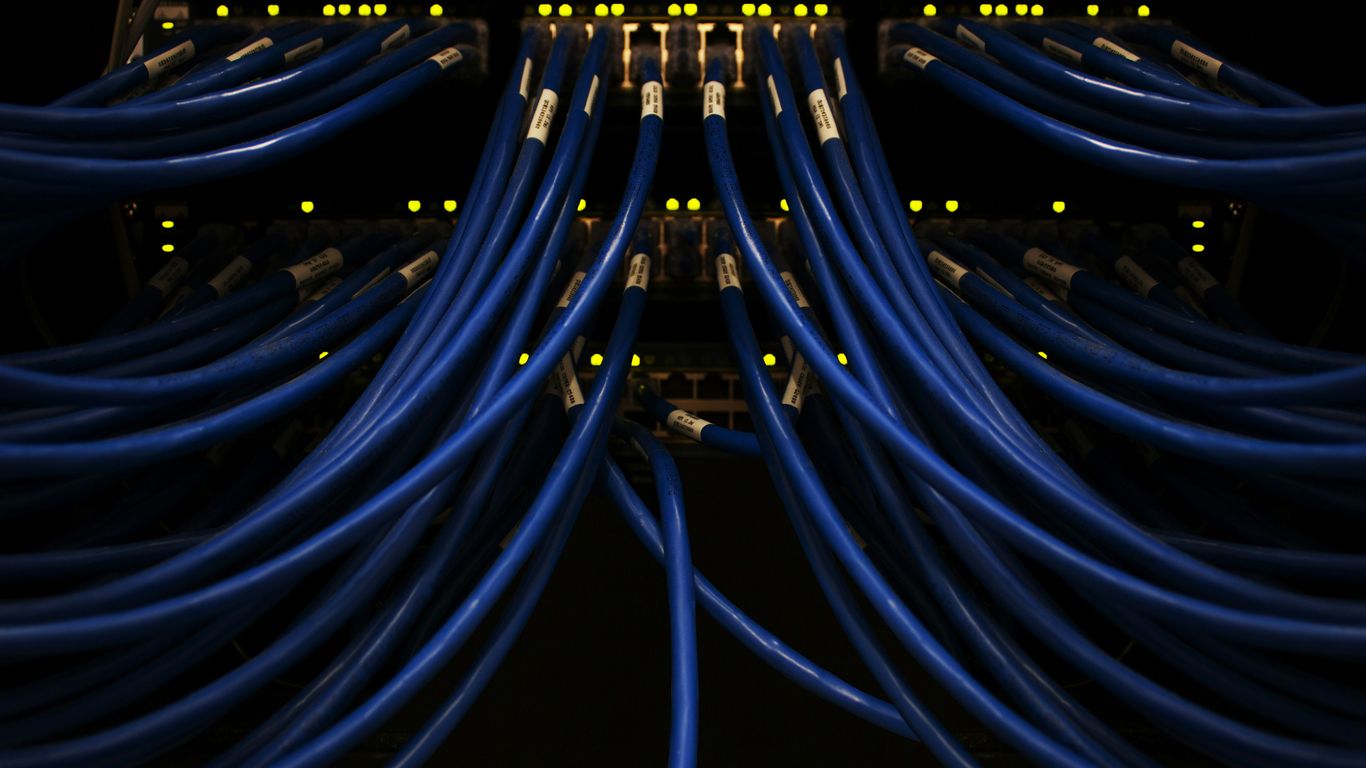
Hardware switches serve as the physical gatekeepers between primary and fallback modes. Unlike a software instruction that might be ignored during a kernel panic, a relay-based electrical switch physically diverts signals when the command signal dies. Professionals can utilize Switch Defense expertise to identify the most robust switching components for their specific infrastructure needs, ensuring that failures are isolated rather than propagated.
Establishing clear switch-over triggers and logic
Automation logic must be tuned to execute a transition only when absolutely necessary to prevent oscillating states. A common framework for these triggers uses timed intervals, where a sustained loss of signal for several milliseconds confirms a true outage rather than momentary jitter. Incorporating automated logic ensures that the transition is predictable and that it does not exacerbate system instability during high-traffic events.
Managing signal path integrity during transition
During the switch-over, maintaining impedance matching is vital to prevent reflections or signal degradation. This requires careful cabling and interface management, often using standardized physical layer hardware to ensure signals remain clear. The process of maintaining these lines can be enhanced by bathroom remodeling services in some contexts, but specifically in tech, it refers to standard physical paths. Effective signal handling is critical to ensure that the system restoration process remains consistent during the transition to the fallback state.
Hardware requirements for reliable fallback
Utilizing passive versus active switching components
Passive switches depend on simple mechanical or electromechanical relays, requiring no external power to maintain a state once toggled. Active switches, meanwhile, require steady power and logic controllers, which themselves become new failure points. Engineers often prefer passive relays wherever possible because they offer higher reliability. The following table highlights the critical differences between these component choices:
| Component Type | Reliability | Power Dependency | Complexity |
|---|---|---|---|
| Passive Relay | Very High | None | Low |
| Active Logic | Moderate | High | High |
| Smart Hub | Moderate | High | Medium |
Selecting the right component hinges on the site-specific requirements for latency and load capacity, ensuring that the infrastructure remains secure under stress.
Mitigating power dependency in secondary loops
Reliability is only as good as the local power source supporting the hardware. Engineers should design secondary loops with independent power feeds or battery backup to ensure they can toggle even when the primary grid is down. Ensuring these loops remain unaffected by primary side surges is essential for Switch Defense strategies, which aim to keep systems operational throughout the worst-case scenario. Proper isolation techniques here prevent the secondary loop from becoming electrically coupled to a failing primary circuit.
Ensuring compatibility with legacy transport protocols
Many fallback pathways must support older signaling standards that are no longer used by the primary network. Compatibility is a key hurdle, but it also allows the fallback to work even if the entire modern equipment stack needs a hard reboot. Maintaining support for these protocols allows technicians to bridge the gap between legacy and contemporary infrastructure without requiring complete system retrofits.
Integrating trigger mechanisms and monitoring

Setting thresholds for automated failure detection
Effective monitoring uses statistical thresholds rather than binary "on or off" checks. For instance, a system might track signal-to-noise ratios, triggering a fallback if the quality consistently degrades below a reliable bar for three successive packets. This proactive detection prevents complete system collapse by moving to the fallback before the connection vanishes entirely.
Managing human-in-the-loop manual overrides
Automation can sometimes become a liability if the trigger mechanism reacts to a false indicator of trouble. Providing a clear, well-documented manual override allows human operators to seize control and prevent an unnecessary switch-over. Teams must follow a structured playbook to ensure that manual intervention is consistent with the standard incident response playbooks for the organization.
Preventing false positives in transition logic
To keep operations smooth, engineers often implement a list of verification steps before allowing a hard transition. Consider these common practices for validating triggers:
- Cross-verify the error signal with multiple independent hardware sensors.
- Implement a "cooldown" period to prevent repeated rapid switching.
- Log the exact physical parameters that caused the trigger for later analysis.
- Require multi-factor validation if the switch leads to permanent state changes.
By ensuring that the system analyzes the environment comprehensively before changing its configuration, operators avoid the disruption caused by transient sensor noise.
Maintenance and testing of fallback mechanisms
Developing consistent simulation and failure drills
Testing is the only way to prove a fallback will actually work under pressure. Regular drills should simulate a total failure of the primary system, forcing the fallback to engage without warning. This practice reveals hidden dependencies or bottlenecks that might have been ignored during the initial design phase.
Monitoring the performance decay of dormant equipment
Secondary hardware can fail silently because it is only used during crises. Periodically rotating the load between primary and secondary paths ensures that dormant equipment remains functional and that any degradation is identified while the backup is still optional. This approach limits the chance of discovering a broken fallback during a legitimate emergency.
Documenting change management for physical pathways
Physical cables and jumpers are often adjusted, removed, or misplaced during standard facility maintenance. Every change to the infrastructure must be recorded in a living central configuration database to ensure that the physical pathway accurately reflects the intended system design. Documentation is a key control that prevents the accidental disabling of security pathways during routine repairs.
Challenges and operational caveats
Managing latency shifts during switch-over events
Any physical switch will introduce a moment of signal interruption. If the network stack is too sensitive to timing, this momentary delay can cause sessions to timeout or databases to disconnect. Engineers must buffer data or design state-aware systems that can bridge these small gaps in timing without triggering a secondary error.
Assessing security implications of simplified bypass paths
Fallback paths often lack the advanced traffic filtering or deep-packet inspection present in the primary network. This creates a security gap where an attacker might intentionally trigger a fallback to force traffic onto a weaker path. Organizations must address this risk by auditing bypass path security, even if those paths are intended to be minimalist.
Accounting for signal quality loss between domains
Transitioning from high-speed digital optics to lower-bandwidth analog signals requires careful signal conditioning. If the system is not prepared for this drop in bandwidth, the quality of service will tank immediately. Teams should prioritize clear documentation of expected performance metrics for fallback modes so that stakeholders understand the limitations until the primary is restored.
Industry-specific applications of analog fallback
Securing broadcast and media transmission standards
Broadcast networks require instant recovery to satisfy legal and public safety requirements. By deploying analog fallback, stations can continue delivering core messages even if their main studio-to-transmitter link is destroyed. Maintaining this high availability is a foundational pillar of modern media resilience planning.
Improving persistence in industrial control systems
Industrial environments often prioritize safety and availability over all else. An automated plant that can switch to local analog control can protect its physical assets during a total network breach. Protecting these systems from lateral movement and ensuring persistence is a critical part of modern Switch Defense strategies, preventing catastrophic physical damage.
Ensuring connectivity resilience in telecommunications infrastructure
Telecommunications providers use fallback to prevent global outages from local hardware failures. By using protocol-independent switches, they can maintain core routing or data flow even when sophisticated software controls fail or are targeted. This resilience ensures that public communication survives even when the digital environment is compromised.
Conclusion
Analog fallback operational systems, while seemingly a step backward in technological sophistication, remain an indispensable component of any robust resilience strategy. By ensuring that a physical, software-agnostic path exists for critical services, organizations secure themselves against failure modes that digital systems cannot easily navigate. Preparation, regular testing, and disciplined maintenance turn these dormant circuits into powerful assets that maintain continuity when the digital world falters.
Frequently Asked Questions
Why do we need analog fallback if the system is digital?
Digital systems rely on software, firmware, and complex logic, all of which are susceptible to crashes, bugs, and remote exploitation. Analog fallback provides a final, physically-based safety measure that functions independently of the primary digital stack, ensuring that essential operations stay online even during total digital failure.
What are the main risks of relying on a fallback system?
A common risk is that the fallback equipment is neglected, leading to rust, outdated configurations, or dead batteries when it is eventually needed. Security professionals also warn that fallback pathways may lack the advanced encryption and packet-filtering of the primary system, potentially creating a temporary security vulnerability during use.
How often should we test the standby hardware?
Testing frequency depends on the criticality of the service, but a quarterly maintenance schedule is standard for most infrastructure. Regular tests should include physical inspection, current loop testing, and an actual fail-over simulation to ensure the system engages as expected without manual intervention.
Can any communication protocol be switched using an analog switch?
Most industrial analog switches are protocol-independent, meaning they simply pass electrical current or pulses; they do not interpret the data layer at all. This makes them highly versatile for RS-232, fiber, phone lines, or video signals, as long as the electrical characteristics align with the physical switch specs.
Does manual switching always imply human intervention?
Not always, but in many cases, manual overrides are necessary to prevent the switch from engaging due to false positives in the detection sensors. When designing a system, the choice between fully automated and manual switching is often driven by the risk of an unintended disconnection versus the speed needed to restore service.
What happens if the fallback system is already compromised?
If the fallback pathway itself is compromised, the redundancy plan will fail. It is critical to secure the physical bypass paths with the same level of integrity as the primary network, including locking down cable cabinets, using tamper-evident seals, and monitoring the hardware’s physical location for unauthorized access.
What are the most common causes for a switch-over misfire?
The most common culprits are faulty sensors, power fluctuations in the primary input, or high latency in the monitoring software causing a timeout. Ensuring that triggers are statistically based rather than binary can help reduce the frequency of misfires, as can adding a "cooldown" logic to the control software.