
Authentication Bypass Through Voice Synthesis


Lately, there’s been a lot of talk about how AI can create fake voices that sound incredibly real. While this tech is pretty amazing for things like audiobooks or virtual assistants, it also opens up some serious security risks. We’re talking about bypassing security systems that rely on your voice. This article is going to break down how this voice synthesis authentication bypass works, what it means for us, and what we can do about it.

Key Takeaways

  • Voice synthesis authentication bypass involves using AI-generated voices to trick systems that normally rely on a person’s unique voiceprint for verification.
  • Attackers can create ‘deepfake’ audio by cloning someone’s voice, making it possible to impersonate them and gain unauthorized access.
  • These attacks can target voice-based multi-factor authentication, potentially leading to financial fraud or access to sensitive accounts.
  • To combat these threats, security needs to move beyond just voice recognition, incorporating methods like liveness detection and behavioral analysis.
  • The ongoing development of AI means that both attackers and defenders are constantly evolving, making continuous updates to security measures necessary.

Understanding Voice Synthesis Authentication Bypass

Voice synthesis, often called voice cloning, is getting really good. It’s so good, in fact, that it’s starting to cause problems for how we secure things. Think about it: you might use your voice to log into an app or confirm a transaction. If someone can perfectly mimic your voice, they could potentially trick these systems. This isn’t just science fiction anymore; it’s a growing concern in cybersecurity.

The Rise of Synthetic Media in Authentication

We’re seeing more and more AI-generated content, and voice is a big part of that. Companies are starting to use voice biometrics as a way to identify people. It seems convenient, right? Just speak, and you’re in. But this convenience comes with a risk. Attackers can use sophisticated tools to create fake voice recordings that sound just like a real person. This ability to mimic voices is a direct threat to systems that rely solely on voice for authentication. It means that simply hearing a voice might not be enough to know if it’s really the person it claims to be.

Exploiting Trust in Voice-Based Systems

Many systems are built on the assumption that a voice belongs to the person it’s supposed to. This is where the bypass happens. If an attacker can clone a voice, they can exploit this trust. They might call a bank, pretending to be a customer, and use the cloned voice to pass security checks. This is particularly worrying for systems that don’t have other checks in place. It’s like leaving your front door unlocked because you trust everyone who walks by.

The Evolving Threat Landscape of Voice Synthesis Authentication Bypass

This isn’t a static problem. As AI gets better, so do the tools attackers use. What might be hard to do today could be simple tomorrow. We’re seeing a constant back-and-forth between those trying to secure systems and those trying to break them. This means security measures need to keep up. Relying on just one method of authentication, like voice, is becoming less secure. It’s important to think about multiple layers of security, like using multi-factor authentication to make sure someone is who they say they are.

Here’s a quick look at how this threat is growing:

  • Increased Sophistication: AI models are becoming more advanced, making voice clones harder to detect.
  • Accessibility: Tools for creating synthetic voices are becoming more available, lowering the barrier to entry for attackers.
  • Targeted Attacks: Attackers can use voice cloning for specific goals, like impersonating executives or family members.

The core issue is that voice biometrics, while convenient, can be fooled by advanced synthetic media. This necessitates a move towards more robust, multi-layered security approaches that don’t rely on a single point of failure.

Technical Mechanisms of Voice Synthesis Attacks

Voice synthesis attacks, often powered by advanced AI, are becoming a significant concern for authentication systems. These attacks don’t just mimic a voice; they aim to bypass security measures by creating highly convincing audio. Understanding how these attacks work is the first step in defending against them.

Deepfake Audio Generation Techniques

At the core of these attacks is the ability to generate synthetic audio that sounds remarkably like a real person. This is achieved through sophisticated machine learning models, primarily deep neural networks. These models are trained on large datasets of a target individual’s voice. The process generally involves several stages:

  1. Data Collection: Gathering audio samples of the target’s voice. The more data, and the higher its quality, the better the synthetic voice will be.
  2. Acoustic Modeling: This stage maps linguistic features (like phonemes) to acoustic features (like pitch and timbre). Models like Tacotron or WaveNet are often used here.
  3. Vocoding: Converting the acoustic features into an audible waveform. This is what produces the actual sound.

The quality of the generated audio is directly proportional to the quantity and diversity of the training data. Even short clips can sometimes be enough for attackers to create a usable synthetic voice, especially with advanced models that can generalize well. This is a key reason why even seemingly minor voice samples can be risky.

Mimicking Biometric Voice Signatures

Voice biometrics rely on unique characteristics of a person’s voice, such as pitch, cadence, and vocal tract shape, to verify identity. Attackers aim to replicate these characteristics precisely. This involves not just matching the sound of the voice but also its subtle nuances that make it unique. Techniques used include:

  • Prosody Replication: Mimicking the rhythm, stress, and intonation patterns of the target speaker. This makes the speech sound natural and not robotic.
  • Timbre Matching: Recreating the specific tonal quality of the voice, which is influenced by the speaker’s vocal cords and resonance.
  • Accent and Dialect Emulation: For systems that might be sensitive to regional variations, attackers can also try to replicate specific accents.

When these elements are combined effectively, the synthetic voice can be almost indistinguishable from the genuine speaker to both human ears and, more critically, to automated voice recognition systems. This makes it a powerful tool for impersonation.

Exploiting Vulnerabilities in Voice Recognition Software

Even the most advanced voice synthesis models can be rendered ineffective if the voice recognition software itself has weaknesses. Attackers look for ways to exploit these vulnerabilities:

  • Limited Training Data: Some systems might not have been trained on a wide enough variety of voices or speech patterns, making them susceptible to even slightly imperfect synthetic voices.
  • Lack of Liveness Detection: Many systems struggle to differentiate between a live human voice and a pre-recorded or synthesized one. This is a major gap that voice synthesis attacks exploit.
  • Sensitivity to Noise and Distortion: While some systems are robust, others might be thrown off by background noise or specific audio artifacts. Attackers might intentionally introduce these to test system limits or mask subtle imperfections in their synthetic audio.

The effectiveness of a voice synthesis attack often depends on a combination of sophisticated audio generation and exploitable weaknesses in the target authentication system. It’s a cat-and-mouse game where attackers constantly seek new ways to fool the technology, and defenders work to build more resilient systems. The rise of synthetic media means that simply hearing a voice is no longer a guarantee of identity.

These technical underpinnings are what make voice synthesis a potent threat. As the technology improves, so does its potential for misuse in bypassing security measures, including those used in synthetic identity fraud.

Attack Vectors for Voice Synthesis Authentication Bypass

Voice synthesis, especially when it’s highly realistic, opens up some pretty interesting, and frankly, worrying, ways attackers can try to get around security systems. It’s not just about making a voice sound like someone; it’s about using that convincing sound to trick systems and people. We’re seeing a few main ways this plays out.

Impersonation Through Voice Cloning

This is probably the most direct method. Attackers use sophisticated tools to create a synthetic replica of a target’s voice. This isn’t just a simple recording; it’s a deepfake audio that can mimic tone, accent, and even speech patterns with surprising accuracy. Once they have this cloned voice, they can use it to impersonate the legitimate user in various scenarios. Think about calling a bank to authorize a transaction or trying to access a secure system over the phone. If the system relies solely on voice biometrics, a convincing clone could bypass it entirely. The goal is to fool the authentication system into believing the attacker is the authorized user.

Social Engineering Leveraging Synthetic Voices

Beyond direct impersonation for authentication, attackers can use synthetic voices to enhance social engineering tactics. Imagine receiving a call from what sounds exactly like your boss, urgently asking you to transfer funds or provide sensitive information. The AI-generated voice adds a layer of authenticity that makes the request seem legitimate, even if the underlying request is fraudulent. This plays on our natural tendency to trust familiar voices, especially those in positions of authority. These attacks can be incredibly effective because they exploit human psychology rather than just technical flaws. It’s a way to trick people into compromising security without needing to break into systems directly.

Bypassing Voice-Based Multi-Factor Authentication

Multi-factor authentication (MFA) is supposed to be a strong defense, requiring more than just a password. But what happens when one of those factors is voice? If an attacker can clone a voice, they might be able to bypass a voice-based MFA step. For example, if a system asks for a voice confirmation after a password, a cloned voice could potentially satisfy that requirement. This highlights a critical vulnerability: if any single factor can be convincingly faked, the entire MFA setup is weakened. It means that relying too heavily on voice as a sole or primary factor in MFA can be a significant risk. Attackers are always looking for the weakest link, and a perfect voice clone can become that link.

Real-World Implications and Case Studies

It’s easy to talk about voice synthesis attacks in theory, but what does it actually look like when these things happen in the wild? The reality is, these attacks aren’t just hypothetical scenarios anymore. They’re actively being used to cause real damage, and the consequences can be pretty severe.

Financial Fraud Using Synthetic Voices

One of the most immediate and concerning uses of voice synthesis is in financial fraud. Imagine getting a call from what sounds exactly like your boss, urgently asking you to wire money for a "critical" business deal. This isn’t science fiction; it’s a tactic that’s already been employed. Attackers use voice cloning to mimic the voice of a trusted executive or colleague, creating a sense of authority and urgency that can bypass normal checks and balances. This kind of social engineering, amplified by realistic synthetic voices, can lead to significant financial losses for individuals and businesses alike. The speed at which these transactions can be initiated and completed, often before anyone realizes it’s a scam, makes it particularly dangerous. It highlights how easily our trust in familiar voices can be exploited.

Unauthorized Access to Sensitive Accounts

Beyond financial scams, voice synthesis can be used to gain unauthorized access to sensitive accounts. Many services, especially those dealing with personal information or financial accounts, use voice biometrics as a security measure. However, if these systems aren’t robust enough, a sufficiently convincing synthetic voice could potentially fool them. Think about accessing a bank account, a medical record, or even a secure corporate network. If an attacker can replicate a legitimate user’s voice signature, they might be able to bypass these security layers. This is especially true if the voice authentication system relies solely on the audio input without additional verification steps. The implications for privacy and security are enormous, as it opens the door to identity theft and data breaches on a large scale.

Impact on Customer Service and Support Systems

Even in less critical scenarios, voice synthesis attacks can disrupt customer service and support operations. Imagine a scammer calling a company’s support line, using a cloned voice of a customer to request sensitive information or make changes to an account. This could lead to account takeovers, fraudulent service changes, or the exposure of personal data. For businesses, this means dealing with the fallout of compromised customer accounts, potential regulatory fines, and significant damage to their reputation. Customers lose trust when they feel their information isn’t safe, and dealing with the aftermath of such attacks can be a huge drain on resources. It forces companies to re-evaluate their verification processes and invest in more advanced security measures to protect both their customers and their operations. The sophistication of these attacks means that even well-intentioned security protocols can sometimes be circumvented, making continuous adaptation a necessity.

Mitigation Strategies for Voice Synthesis Threats

Dealing with voice synthesis attacks means we need to get smarter about how we verify who’s actually on the other end of the line. It’s not just about what you say, but how you say it, and even more importantly, proving it’s really you. We’re looking at a few key areas to build stronger defenses.

Advanced Voice Biometric Security

This is where we go beyond simple voice recognition. Instead of just matching a voice to a stored sample, advanced systems analyze a much wider range of characteristics. Think about the subtle nuances in speech – the rhythm, the pitch variations, even the way someone breathes. These systems try to capture that unique ‘voiceprint’.

  • Liveness Detection: A big part of this is making sure the voice is coming from a live person, not a recording or a synthesized imitation. This can involve asking users to perform random actions, like saying a specific phrase or making a particular sound, in real-time. If the system can’t get that live response, it’s a red flag.
  • Multi-Factor Biometrics: Combining voice with other biometric data, like facial recognition or even typing patterns, makes it much harder for an attacker to succeed. If a voice clone works, but the face doesn’t match, the system can flag it.
  • Speaker Verification vs. Identification: It’s important to distinguish between verifying a claimed identity (e.g., ‘Is this John Doe?’) and identifying an unknown speaker (e.g., ‘Who is speaking?’). For authentication, verification is key, and it requires a much higher degree of certainty.

Multi-Layered Authentication Protocols

Relying on just one method of authentication is like leaving your front door unlocked. We need multiple layers of security. This means combining different types of authentication to create a more robust defense.

  • Knowledge Factors: Things you know, like passwords or PINs. While these can be compromised, they’re still a necessary part of the puzzle.
  • Possession Factors: Things you have, such as a one-time code sent to your phone or a physical security key. This is a strong layer against many attacks.
  • Inherence Factors: Things you are, which is where biometrics like voice, fingerprint, or facial scans come in. The goal is to make sure an attacker needs at least two of these factors to gain access.

Behavioral Analysis and Anomaly Detection

This is about looking at the bigger picture and spotting anything that seems out of the ordinary. It’s not just about the voice itself, but how the interaction is happening.

  • Interaction Patterns: Does the caller ask unusual questions? Do they seem hesitant or rushed? Are they trying to bypass standard procedures? These behavioral cues can be indicators of a potential attack.
  • Device and Network Analysis: Where is the call coming from? Is it a known device or IP address? Unusual locations or network traffic can be suspicious.
  • Transaction Monitoring: For financial or sensitive account access, monitoring the actual transactions being requested is vital. A voice that sounds legitimate might be trying to initiate a fraudulent transfer. This is a key part of preventing Business Email Compromise scams that might start with a voice impersonation.

Building effective defenses against voice synthesis attacks requires a proactive approach. It’s not enough to just react to threats; we need to anticipate them by layering security measures and continuously monitoring for suspicious activity. This includes educating users about the risks and implementing technologies that can detect subtle signs of manipulation.

Developing Robust Voice Authentication Systems

Building voice authentication systems that can stand up to sophisticated attacks requires a layered approach. It’s not just about capturing a voice sample anymore; it’s about making sure that sample is real and belongs to the person it’s supposed to. We need to think about how attackers might try to fool the system and build defenses against those specific methods.

Implementing Liveness Detection

Liveness detection is a big deal here. It’s all about making sure the voice being presented is from a live person, not a recording or a synthesized copy. Think of it like how your phone checks if your face is actually there when you unlock it, not just a picture. For voice, this can involve asking the user to perform specific, unpredictable actions during the authentication process. For example, asking them to say a random sequence of numbers or words that changes each time. This makes it much harder for pre-recorded or cloned audio to work.

Here are some common liveness detection techniques:

  • Challenge-Response: The system prompts the user with a unique, randomized phrase or sequence. This is probably the most straightforward method.
  • Acoustic Analysis: Analyzing the subtle nuances of a live voice, like background noise, breathing patterns, or micro-tremors, which are difficult to replicate perfectly in synthetic audio.
  • Physiological Signals: In more advanced systems, this could involve looking at things like heart rate variability or even subtle facial movements captured by a camera, though this moves beyond pure voice authentication.

The goal of liveness detection is to differentiate between a genuine, live human voice and any form of artificial replication. This is a critical step in preventing basic voice spoofing attacks.

Continuous Authentication Monitoring

Once someone is authenticated, the job isn’t necessarily done. Continuous monitoring means keeping an eye on the user’s voice characteristics throughout their session. If the voice starts to change significantly, or if it deviates from the expected patterns for that user, the system can flag it as suspicious. This is especially useful for detecting if an attacker has taken over an active session. It’s like having a security guard who doesn’t just check your ID at the door but also keeps an eye on you while you’re inside.

This monitoring can look at:

  • Voice Stability: How consistent are the user’s pitch, tone, and speaking speed over time?
  • Environmental Factors: Are there sudden changes in background noise or acoustic conditions that don’t match the user’s typical environment?
  • Behavioral Patterns: Does the user’s interaction style (e.g., pauses, filler words) remain consistent?

Secure Development Practices for Voice AI

When building these systems, security needs to be baked in from the start. This means following secure coding standards, performing regular security testing, and being mindful of potential vulnerabilities in the AI models themselves. For instance, AI models can sometimes be tricked through adversarial attacks, where subtle, often imperceptible changes to the input can cause the model to misclassify it. Developers need to be aware of these risks and implement defenses. This includes things like robust input validation and using techniques to make the AI models more resilient to manipulation. It’s about building a strong foundation so that the advanced features don’t become weak points. This is part of a broader strategy to build secure systems, similar to how adaptive authentication adjusts security based on risk.

The Role of AI in Countering Voice Synthesis Attacks
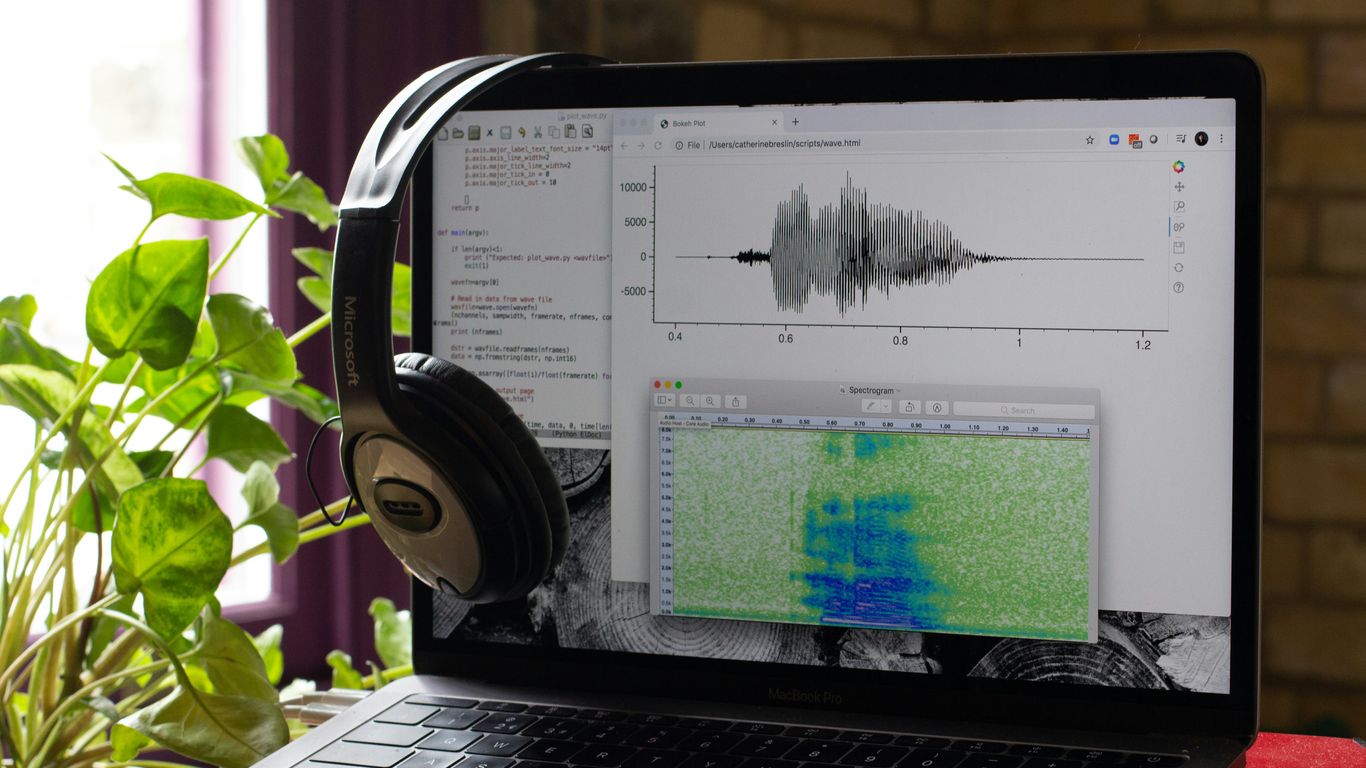
a laptop computer with headphones on top of it

Artificial intelligence (AI) is becoming a really important tool in the fight against voice synthesis attacks. It’s not just about building better defenses; it’s about creating systems that can adapt as fast as the attackers do. Think of it as a constant back-and-forth, where AI helps us stay one step ahead.

AI-Powered Voice Anomaly Detection

One of the main ways AI helps is by spotting things that just don’t sound right. Normal voice authentication systems might check if the voice matches a stored profile, but AI can go much deeper. It looks for subtle inconsistencies that a human might miss, like unusual pauses, strange inflections, or background noise that doesn’t fit. These systems can analyze a huge amount of data to find patterns that indicate a synthetic voice, even if it sounds pretty convincing to us.

  • Real-time Analysis: AI algorithms can process voice data as it comes in, flagging suspicious audio immediately.
  • Pattern Recognition: Machine learning models are trained on vast datasets of both real and synthetic voices to identify tell-tale signs.
  • Contextual Awareness: Advanced AI can consider the context of the interaction, looking for anomalies beyond just the voice itself.

Real-time Voice Signature Verification

Beyond just detecting anomalies, AI can also verify voice signatures in real-time with more precision. This means that during an ongoing conversation or transaction, the system continuously checks if the voice still matches the expected profile. If the voice characteristics start to drift or change in a way that suggests manipulation, the system can flag it. This is a big step up from a one-time check at the beginning of an interaction. It’s like having a security guard who doesn’t just check your ID at the door but keeps an eye on you throughout your visit.

AI’s ability to process and analyze complex data streams in real-time is what makes it so effective against rapidly evolving threats like voice synthesis. It’s not just about recognizing known threats; it’s about identifying novel ones based on deviations from normal behavior.

Predictive Threat Intelligence for Voice Systems

AI can also be used to predict future threats. By analyzing trends in attack methods, looking at new research in voice synthesis, and monitoring global threat intelligence feeds, AI can help organizations prepare for what’s coming next. This proactive approach means that defenses can be updated before an attack even happens. It’s about using data to anticipate the next move of attackers, rather than just reacting to their current tactics. This kind of predictive capability is vital in staying ahead in the ongoing arms race between attackers and defenders.

Here’s a look at how AI contributes:

  1. Trend Analysis: Identifying emerging patterns in voice synthesis technology and attack vectors.
  2. Vulnerability Forecasting: Predicting potential weaknesses in current voice authentication systems based on new research.
  3. Adaptive Defense Planning: Recommending updates and changes to security protocols based on predicted threats.

Legal and Ethical Considerations

When we talk about voice synthesis attacks, it’s not just a technical problem. There are some pretty big legal and ethical questions that come up, and honestly, they’re not always easy to answer. For starters, figuring out who actually did the deed can be a real headache. If someone uses a cloned voice to commit fraud, tracing it back to the original attacker isn’t always straightforward. This makes prosecution tough.

Attribution Challenges in Voice Synthesis Attacks

It’s like trying to catch smoke. Attackers can use anonymizing tools, route their attacks through multiple countries, and even use compromised systems that don’t belong to them. This makes it incredibly difficult to pinpoint the responsible party. The technology itself can be accessed by almost anyone, further complicating attribution. This lack of clear accountability can embolden malicious actors.

Regulatory Responses to Deepfake Threats

Governments and regulatory bodies are starting to pay attention, but it’s a slow process. Laws are still catching up to the technology. We’re seeing some movement towards regulating deepfakes, especially when they’re used to spread misinformation or commit fraud. However, a lot of this is still in the early stages, and what’s considered illegal in one place might not be in another. It’s a patchwork of rules, and it’s constantly changing. For instance, some regions are looking at stricter rules around consent for voice cloning, especially for public figures.

Ethical Guidelines for Voice AI Development

Beyond the law, there’s the whole ethical side of things. Developers of voice AI have a responsibility to think about how their creations could be misused. This means building in safeguards and considering the potential negative impacts from the get-go. It’s about more than just making the tech work; it’s about making it work responsibly. This includes:

  • Being transparent about the capabilities and limitations of voice AI.
  • Implementing robust security measures to prevent unauthorized voice cloning.
  • Considering the potential for bias in voice recognition and synthesis systems.
  • Establishing clear terms of service that prohibit malicious use.

The rapid advancement of voice synthesis technology presents a dual-edged sword. While offering innovative applications, it simultaneously introduces significant risks related to deception and unauthorized access. Addressing these challenges requires a proactive approach that combines legal frameworks, ethical development practices, and robust security measures to stay ahead of potential misuse.

Ultimately, dealing with voice synthesis attacks means we need a multi-faceted approach. We need better technology to detect fakes, clearer laws to prosecute offenders, and a strong ethical compass guiding the development and use of this powerful technology. It’s a complex puzzle, and everyone involved has a part to play in solving it. This is especially true when considering how these technologies might be used in social engineering tactics, which often rely on exploiting human trust rather than technical flaws [cb2e].

Future Trends in Voice Authentication Security
person using laptop computers

The landscape of voice authentication is constantly shifting, and staying ahead of attackers means looking at what’s coming next. It’s a bit of an arms race, really. As voice synthesis tech gets better, so do the ways people try to trick systems. We’re seeing a push towards more advanced methods to keep things secure.

The Arms Race Between Attackers and Defenders

This is where things get interesting. On one side, you have attackers getting smarter, using AI to create more convincing fake voices. They’re not just trying to mimic a single phrase anymore; they’re aiming for longer, more natural-sounding conversations that can fool even sophisticated systems. On the other side, security researchers and companies are developing countermeasures. This involves creating better detection algorithms that can spot subtle anomalies in synthesized speech that humans might miss. It’s a constant cycle of innovation and adaptation.

Emerging Technologies for Voice Verification

We’re moving beyond just matching a voiceprint. New technologies are focusing on continuous authentication, meaning the system keeps checking who you are throughout your interaction, not just at the start. Think about how your phone might unlock when you pick it up – it’s a similar idea, but for voice. This could involve analyzing not just the sound of your voice, but also your speaking patterns, accent nuances, and even how you pause or breathe. Another area is liveness detection, which tries to ensure the voice is coming from a real person speaking in real-time, not a recording or a synthesized output. This is becoming a really important part of the puzzle.

Proactive Defense Against Evolving Voice Synthesis Authentication Bypass

Instead of just reacting to attacks, the future is about being proactive. This means using threat intelligence to anticipate what kinds of attacks might come next. It also involves building systems that are inherently more resilient. For example, instead of relying on a single voice authentication factor, we’ll see more multi-layered approaches. This could combine voice with other biometrics, or even behavioral analysis – how you type, how you move your mouse, things like that. The goal is to make it so difficult for an attacker to impersonate someone that it’s simply not worth the effort. It’s about building trust in our systems, even as the threats evolve. The idea of federated authentication is also becoming more relevant, where trust is managed across different systems, but this also requires robust security to prevent failures.

Here’s a quick look at some key trends:

  • AI-Powered Anomaly Detection: Using AI to spot unusual voice patterns that deviate from a user’s normal speech. This goes beyond simple voice matching.
  • Behavioral Biometrics Integration: Combining voice data with other user behaviors (typing speed, navigation patterns) for a more robust identity check.
  • Quantum-Resistant Cryptography: While not directly voice-related, preparing for future encryption challenges will be vital for securing all data, including voice profiles.
  • Decentralized Identity Solutions: Exploring ways to give users more control over their identity data, potentially reducing the impact of large-scale breaches.

Looking Ahead: Staying Ahead of Voice Synthesis Threats

So, we’ve talked about how voice synthesis tech can be used to trick systems and people. It’s pretty wild how far this stuff has come, and honestly, it’s only going to get better. This means we can’t just ignore it. For businesses, it’s about putting up more than just one wall. Think about adding extra checks, like asking for a specific phrase or using a secondary verification method, especially for important stuff like money transfers. And for all of us, it’s about being a bit more skeptical. If something sounds a little off, or too good to be true, it’s worth double-checking. Staying aware and layering our defenses, both technically and personally, is really the best way to keep these kinds of attacks from working.

Frequently Asked Questions

What is voice synthesis and how can it be used to bypass security?

Voice synthesis, also known as text-to-speech, is technology that can create human-like speech from written text. Bad actors can use it to make fake voices that sound like real people. They might use these fake voices to trick voice-based security systems, like those that recognize your voice to let you into an account or service. It’s like a digital puppet show for your ears!

How do hackers create fake voices?

Hackers use advanced computer programs, often powered by AI, to create these fake voices. They can feed these programs recordings of a person’s voice, and the AI learns to copy it perfectly. This is sometimes called ‘voice cloning’ or making ‘deepfake audio.’ It’s getting so good that it can be hard to tell the difference between a real voice and a fake one.

Can voice synthesis fool voice recognition systems?

Yes, that’s the main problem! Voice recognition systems are designed to identify unique voice patterns. However, when a fake voice is created to sound exactly like a real person’s voice, it can trick these systems into thinking it’s the legitimate user. This allows attackers to get past security measures that rely only on voice.

What are ‘deepfakes’ in the context of voice?

Deepfakes are fake media created using AI. When applied to voice, ‘deepfake audio’ means a synthetic voice that sounds incredibly real and can be used to impersonate someone. Think of it as a digital forgery, but for sound instead of a signature or a painting.

Why are voice-based security systems vulnerable?

These systems are vulnerable because they often rely on a single type of information – your voice. If an attacker can perfectly copy that voice, they can bypass the system. Also, some older systems might not be advanced enough to detect the subtle differences between a real voice and a synthesized one.

What kind of harm can voice synthesis attacks cause?

These attacks can lead to serious problems. Hackers could use fake voices to access your bank accounts, steal personal information, commit fraud, or even gain access to sensitive company data. It’s like someone using a perfect disguise to rob a bank.

How can we protect ourselves from voice synthesis attacks?

One of the best ways is to use more than one way to prove who you are, like a password plus a code from your phone (this is called multi-factor authentication). Companies can also use smarter technology that checks not just your voice, but also how you speak and other unique patterns. Being aware of these threats is also super important!

Is AI being used to fight these fake voice attacks?

Absolutely! Just like AI is used to create fake voices, it’s also being used to detect them. AI can be trained to spot the tiny flaws or unnatural patterns in synthesized speech that humans might miss. It’s like having a digital detective that listens extra carefully to catch the fakes.

Authentication Bypass Through Voice Synthesis


Lately, there’s been a lot of talk about how AI can create fake voices that sound incredibly real. While this tech is pretty amazing for things like audiobooks or virtual assistants, it also opens up some serious security risks. We’re talking about bypassing security systems that rely on your voice. This article is going to break down how this voice synthesis authentication bypass works, what it means for us, and what we can do about it.

Key Takeaways

  • Voice synthesis authentication bypass involves using AI-generated voices to trick systems that normally rely on a person’s unique voiceprint for verification.
  • Attackers can create ‘deepfake’ audio by cloning someone’s voice, making it possible to impersonate them and gain unauthorized access.
  • These attacks can target voice-based multi-factor authentication, potentially leading to financial fraud or access to sensitive accounts.
  • To combat these threats, security needs to move beyond just voice recognition, incorporating methods like liveness detection and behavioral analysis.
  • The ongoing development of AI means that both attackers and defenders are constantly evolving, making continuous updates to security measures necessary.

Understanding Voice Synthesis Authentication Bypass

Voice synthesis, often called voice cloning, is getting really good. It’s so good, in fact, that it’s starting to cause problems for how we secure things. Think about it: you might use your voice to log into an app or confirm a transaction. If someone can perfectly mimic your voice, they could potentially trick these systems. This isn’t just science fiction anymore; it’s a growing concern in cybersecurity.

The Rise of Synthetic Media in Authentication

We’re seeing more and more AI-generated content, and voice is a big part of that. Companies are starting to use voice biometrics as a way to identify people. It seems convenient, right? Just speak, and you’re in. But this convenience comes with a risk. Attackers can use sophisticated tools to create fake voice recordings that sound just like a real person. This ability to mimic voices is a direct threat to systems that rely solely on voice for authentication. It means that simply hearing a voice might not be enough to know if it’s really the person it claims to be.

Exploiting Trust in Voice-Based Systems

Many systems are built on the assumption that a voice belongs to the person it’s supposed to. This is where the bypass happens. If an attacker can clone a voice, they can exploit this trust. They might call a bank, pretending to be a customer, and use the cloned voice to pass security checks. This is particularly worrying for systems that don’t have other checks in place. It’s like leaving your front door unlocked because you trust everyone who walks by.

The Evolving Threat Landscape of Voice Synthesis Authentication Bypass

This isn’t a static problem. As AI gets better, so do the tools attackers use. What might be hard to do today could be simple tomorrow. We’re seeing a constant back-and-forth between those trying to secure systems and those trying to break them. This means security measures need to keep up. Relying on just one method of authentication, like voice, is becoming less secure. It’s important to think about multiple layers of security, like using multi-factor authentication to make sure someone is who they say they are.

Here’s a quick look at how this threat is growing:

  • Increased Sophistication: AI models are becoming more advanced, making voice clones harder to detect.
  • Accessibility: Tools for creating synthetic voices are becoming more available, lowering the barrier to entry for attackers.
  • Targeted Attacks: Attackers can use voice cloning for specific goals, like impersonating executives or family members.

The core issue is that voice biometrics, while convenient, can be fooled by advanced synthetic media. This necessitates a move towards more robust, multi-layered security approaches that don’t rely on a single point of failure.

Technical Mechanisms of Voice Synthesis Attacks

Voice synthesis attacks, often powered by advanced AI, are becoming a significant concern for authentication systems. These attacks don’t just mimic a voice; they aim to bypass security measures by creating highly convincing audio. Understanding how these attacks work is the first step in defending against them.

Deepfake Audio Generation Techniques

At the core of these attacks is the ability to generate synthetic audio that sounds remarkably like a real person. This is achieved through sophisticated machine learning models, primarily deep neural networks. These models are trained on large datasets of a target individual’s voice. The process generally involves several stages:

  1. Data Collection: Gathering audio samples of the target’s voice. The more data, and the higher its quality, the better the synthetic voice will be.
  2. Acoustic Modeling: This stage maps linguistic features (like phonemes) to acoustic features (like pitch and timbre). Models like Tacotron or WaveNet are often used here.
  3. Vocoding: Converting the acoustic features into an audible waveform. This is what produces the actual sound.

The quality of the generated audio is directly proportional to the quantity and diversity of the training data. Even short clips can sometimes be enough for attackers to create a usable synthetic voice, especially with advanced models that can generalize well. This is a key reason why even seemingly minor voice samples can be risky.

Mimicking Biometric Voice Signatures

Voice biometrics rely on unique characteristics of a person’s voice, such as pitch, cadence, and vocal tract shape, to verify identity. Attackers aim to replicate these characteristics precisely. This involves not just matching the sound of the voice but also its subtle nuances that make it unique. Techniques used include:

  • Prosody Replication: Mimicking the rhythm, stress, and intonation patterns of the target speaker. This makes the speech sound natural and not robotic.
  • Timbre Matching: Recreating the specific tonal quality of the voice, which is influenced by the speaker’s vocal cords and resonance.
  • Accent and Dialect Emulation: For systems that might be sensitive to regional variations, attackers can also try to replicate specific accents.

When these elements are combined effectively, the synthetic voice can be almost indistinguishable from the genuine speaker to both human ears and, more critically, to automated voice recognition systems. This makes it a powerful tool for impersonation.

Exploiting Vulnerabilities in Voice Recognition Software

Even the most advanced voice synthesis models can be rendered ineffective if the voice recognition software itself has weaknesses. Attackers look for ways to exploit these vulnerabilities:

  • Limited Training Data: Some systems might not have been trained on a wide enough variety of voices or speech patterns, making them susceptible to even slightly imperfect synthetic voices.
  • Lack of Liveness Detection: Many systems struggle to differentiate between a live human voice and a pre-recorded or synthesized one. This is a major gap that voice synthesis attacks exploit.
  • Sensitivity to Noise and Distortion: While some systems are robust, others might be thrown off by background noise or specific audio artifacts. Attackers might intentionally introduce these to test system limits or mask subtle imperfections in their synthetic audio.

The effectiveness of a voice synthesis attack often depends on a combination of sophisticated audio generation and exploitable weaknesses in the target authentication system. It’s a cat-and-mouse game where attackers constantly seek new ways to fool the technology, and defenders work to build more resilient systems. The rise of synthetic media means that simply hearing a voice is no longer a guarantee of identity.

These technical underpinnings are what make voice synthesis a potent threat. As the technology improves, so does its potential for misuse in bypassing security measures, including those used in synthetic identity fraud.

Attack Vectors for Voice Synthesis Authentication Bypass

Voice synthesis, especially when it’s highly realistic, opens up some pretty interesting, and frankly, worrying, ways attackers can try to get around security systems. It’s not just about making a voice sound like someone; it’s about using that convincing sound to trick systems and people. We’re seeing a few main ways this plays out.

Impersonation Through Voice Cloning

This is probably the most direct method. Attackers use sophisticated tools to create a synthetic replica of a target’s voice. This isn’t just a simple recording; it’s a deepfake audio that can mimic tone, accent, and even speech patterns with surprising accuracy. Once they have this cloned voice, they can use it to impersonate the legitimate user in various scenarios. Think about calling a bank to authorize a transaction or trying to access a secure system over the phone. If the system relies solely on voice biometrics, a convincing clone could bypass it entirely. The goal is to fool the authentication system into believing the attacker is the authorized user.

Social Engineering Leveraging Synthetic Voices

Beyond direct impersonation for authentication, attackers can use synthetic voices to enhance social engineering tactics. Imagine receiving a call from what sounds exactly like your boss, urgently asking you to transfer funds or provide sensitive information. The AI-generated voice adds a layer of authenticity that makes the request seem legitimate, even if the underlying request is fraudulent. This plays on our natural tendency to trust familiar voices, especially those in positions of authority. These attacks can be incredibly effective because they exploit human psychology rather than just technical flaws. It’s a way to trick people into compromising security without needing to break into systems directly.

Bypassing Voice-Based Multi-Factor Authentication

Multi-factor authentication (MFA) is supposed to be a strong defense, requiring more than just a password. But what happens when one of those factors is voice? If an attacker can clone a voice, they might be able to bypass a voice-based MFA step. For example, if a system asks for a voice confirmation after a password, a cloned voice could potentially satisfy that requirement. This highlights a critical vulnerability: if any single factor can be convincingly faked, the entire MFA setup is weakened. It means that relying too heavily on voice as a sole or primary factor in MFA can be a significant risk. Attackers are always looking for the weakest link, and a perfect voice clone can become that link.

Real-World Implications and Case Studies

It’s easy to talk about voice synthesis attacks in theory, but what does it actually look like when these things happen in the wild? The reality is, these attacks aren’t just hypothetical scenarios anymore. They’re actively being used to cause real damage, and the consequences can be pretty severe.

Financial Fraud Using Synthetic Voices

One of the most immediate and concerning uses of voice synthesis is in financial fraud. Imagine getting a call from what sounds exactly like your boss, urgently asking you to wire money for a "critical" business deal. This isn’t science fiction; it’s a tactic that’s already been employed. Attackers use voice cloning to mimic the voice of a trusted executive or colleague, creating a sense of authority and urgency that can bypass normal checks and balances. This kind of social engineering, amplified by realistic synthetic voices, can lead to significant financial losses for individuals and businesses alike. The speed at which these transactions can be initiated and completed, often before anyone realizes it’s a scam, makes it particularly dangerous. It highlights how easily our trust in familiar voices can be exploited.

Unauthorized Access to Sensitive Accounts

Beyond financial scams, voice synthesis can be used to gain unauthorized access to sensitive accounts. Many services, especially those dealing with personal information or financial accounts, use voice biometrics as a security measure. However, if these systems aren’t robust enough, a sufficiently convincing synthetic voice could potentially fool them. Think about accessing a bank account, a medical record, or even a secure corporate network. If an attacker can replicate a legitimate user’s voice signature, they might be able to bypass these security layers. This is especially true if the voice authentication system relies solely on the audio input without additional verification steps. The implications for privacy and security are enormous, as it opens the door to identity theft and data breaches on a large scale.

Impact on Customer Service and Support Systems

Even in less critical scenarios, voice synthesis attacks can disrupt customer service and support operations. Imagine a scammer calling a company’s support line, using a cloned voice of a customer to request sensitive information or make changes to an account. This could lead to account takeovers, fraudulent service changes, or the exposure of personal data. For businesses, this means dealing with the fallout of compromised customer accounts, potential regulatory fines, and significant damage to their reputation. Customers lose trust when they feel their information isn’t safe, and dealing with the aftermath of such attacks can be a huge drain on resources. It forces companies to re-evaluate their verification processes and invest in more advanced security measures to protect both their customers and their operations. The sophistication of these attacks means that even well-intentioned security protocols can sometimes be circumvented, making continuous adaptation a necessity.

Mitigation Strategies for Voice Synthesis Threats

Dealing with voice synthesis attacks means we need to get smarter about how we verify who’s actually on the other end of the line. It’s not just about what you say, but how you say it, and even more importantly, proving it’s really you. We’re looking at a few key areas to build stronger defenses.

Advanced Voice Biometric Security

This is where we go beyond simple voice recognition. Instead of just matching a voice to a stored sample, advanced systems analyze a much wider range of characteristics. Think about the subtle nuances in speech – the rhythm, the pitch variations, even the way someone breathes. These systems try to capture that unique ‘voiceprint’.

  • Liveness Detection: A big part of this is making sure the voice is coming from a live person, not a recording or a synthesized imitation. This can involve asking users to perform random actions, like saying a specific phrase or making a particular sound, in real-time. If the system can’t get that live response, it’s a red flag.
  • Multi-Factor Biometrics: Combining voice with other biometric data, like facial recognition or even typing patterns, makes it much harder for an attacker to succeed. If a voice clone works, but the face doesn’t match, the system can flag it.
  • Speaker Verification vs. Identification: It’s important to distinguish between verifying a claimed identity (e.g., ‘Is this John Doe?’) and identifying an unknown speaker (e.g., ‘Who is speaking?’). For authentication, verification is key, and it requires a much higher degree of certainty.

Multi-Layered Authentication Protocols

Relying on just one method of authentication is like leaving your front door unlocked. We need multiple layers of security. This means combining different types of authentication to create a more robust defense.

  • Knowledge Factors: Things you know, like passwords or PINs. While these can be compromised, they’re still a necessary part of the puzzle.
  • Possession Factors: Things you have, such as a one-time code sent to your phone or a physical security key. This is a strong layer against many attacks.
  • Inherence Factors: Things you are, which is where biometrics like voice, fingerprint, or facial scans come in. The goal is to make sure an attacker needs at least two of these factors to gain access.

Behavioral Analysis and Anomaly Detection

This is about looking at the bigger picture and spotting anything that seems out of the ordinary. It’s not just about the voice itself, but how the interaction is happening.

  • Interaction Patterns: Does the caller ask unusual questions? Do they seem hesitant or rushed? Are they trying to bypass standard procedures? These behavioral cues can be indicators of a potential attack.
  • Device and Network Analysis: Where is the call coming from? Is it a known device or IP address? Unusual locations or network traffic can be suspicious.
  • Transaction Monitoring: For financial or sensitive account access, monitoring the actual transactions being requested is vital. A voice that sounds legitimate might be trying to initiate a fraudulent transfer. This is a key part of preventing Business Email Compromise scams that might start with a voice impersonation.

Building effective defenses against voice synthesis attacks requires a proactive approach. It’s not enough to just react to threats; we need to anticipate them by layering security measures and continuously monitoring for suspicious activity. This includes educating users about the risks and implementing technologies that can detect subtle signs of manipulation.

Developing Robust Voice Authentication Systems

Building voice authentication systems that can stand up to sophisticated attacks requires a layered approach. It’s not just about capturing a voice sample anymore; it’s about making sure that sample is real and belongs to the person it’s supposed to. We need to think about how attackers might try to fool the system and build defenses against those specific methods.

Implementing Liveness Detection

Liveness detection is a big deal here. It’s all about making sure the voice being presented is from a live person, not a recording or a synthesized copy. Think of it like how your phone checks if your face is actually there when you unlock it, not just a picture. For voice, this can involve asking the user to perform specific, unpredictable actions during the authentication process. For example, asking them to say a random sequence of numbers or words that changes each time. This makes it much harder for pre-recorded or cloned audio to work.

Here are some common liveness detection techniques:

  • Challenge-Response: The system prompts the user with a unique, randomized phrase or sequence. This is probably the most straightforward method.
  • Acoustic Analysis: Analyzing the subtle nuances of a live voice, like background noise, breathing patterns, or micro-tremors, which are difficult to replicate perfectly in synthetic audio.
  • Physiological Signals: In more advanced systems, this could involve looking at things like heart rate variability or even subtle facial movements captured by a camera, though this moves beyond pure voice authentication.

The goal of liveness detection is to differentiate between a genuine, live human voice and any form of artificial replication. This is a critical step in preventing basic voice spoofing attacks.

Continuous Authentication Monitoring

Once someone is authenticated, the job isn’t necessarily done. Continuous monitoring means keeping an eye on the user’s voice characteristics throughout their session. If the voice starts to change significantly, or if it deviates from the expected patterns for that user, the system can flag it as suspicious. This is especially useful for detecting if an attacker has taken over an active session. It’s like having a security guard who doesn’t just check your ID at the door but also keeps an eye on you while you’re inside.

This monitoring can look at:

  • Voice Stability: How consistent are the user’s pitch, tone, and speaking speed over time?
  • Environmental Factors: Are there sudden changes in background noise or acoustic conditions that don’t match the user’s typical environment?
  • Behavioral Patterns: Does the user’s interaction style (e.g., pauses, filler words) remain consistent?

Secure Development Practices for Voice AI

When building these systems, security needs to be baked in from the start. This means following secure coding standards, performing regular security testing, and being mindful of potential vulnerabilities in the AI models themselves. For instance, AI models can sometimes be tricked through adversarial attacks, where subtle, often imperceptible changes to the input can cause the model to misclassify it. Developers need to be aware of these risks and implement defenses. This includes things like robust input validation and using techniques to make the AI models more resilient to manipulation. It’s about building a strong foundation so that the advanced features don’t become weak points. This is part of a broader strategy to build secure systems, similar to how adaptive authentication adjusts security based on risk.

The Role of AI in Countering Voice Synthesis Attacks

a laptop computer with headphones on top of it

Artificial intelligence (AI) is becoming a really important tool in the fight against voice synthesis attacks. It’s not just about building better defenses; it’s about creating systems that can adapt as fast as the attackers do. Think of it as a constant back-and-forth, where AI helps us stay one step ahead.

AI-Powered Voice Anomaly Detection

One of the main ways AI helps is by spotting things that just don’t sound right. Normal voice authentication systems might check if the voice matches a stored profile, but AI can go much deeper. It looks for subtle inconsistencies that a human might miss, like unusual pauses, strange inflections, or background noise that doesn’t fit. These systems can analyze a huge amount of data to find patterns that indicate a synthetic voice, even if it sounds pretty convincing to us.

  • Real-time Analysis: AI algorithms can process voice data as it comes in, flagging suspicious audio immediately.
  • Pattern Recognition: Machine learning models are trained on vast datasets of both real and synthetic voices to identify tell-tale signs.
  • Contextual Awareness: Advanced AI can consider the context of the interaction, looking for anomalies beyond just the voice itself.

Real-time Voice Signature Verification

Beyond just detecting anomalies, AI can also verify voice signatures in real-time with more precision. This means that during an ongoing conversation or transaction, the system continuously checks if the voice still matches the expected profile. If the voice characteristics start to drift or change in a way that suggests manipulation, the system can flag it. This is a big step up from a one-time check at the beginning of an interaction. It’s like having a security guard who doesn’t just check your ID at the door but keeps an eye on you throughout your visit.

AI’s ability to process and analyze complex data streams in real-time is what makes it so effective against rapidly evolving threats like voice synthesis. It’s not just about recognizing known threats; it’s about identifying novel ones based on deviations from normal behavior.

Predictive Threat Intelligence for Voice Systems

AI can also be used to predict future threats. By analyzing trends in attack methods, looking at new research in voice synthesis, and monitoring global threat intelligence feeds, AI can help organizations prepare for what’s coming next. This proactive approach means that defenses can be updated before an attack even happens. It’s about using data to anticipate the next move of attackers, rather than just reacting to their current tactics. This kind of predictive capability is vital in staying ahead in the ongoing arms race between attackers and defenders.

Here’s a look at how AI contributes:

  1. Trend Analysis: Identifying emerging patterns in voice synthesis technology and attack vectors.
  2. Vulnerability Forecasting: Predicting potential weaknesses in current voice authentication systems based on new research.
  3. Adaptive Defense Planning: Recommending updates and changes to security protocols based on predicted threats.

Legal and Ethical Considerations

When we talk about voice synthesis attacks, it’s not just a technical problem. There are some pretty big legal and ethical questions that come up, and honestly, they’re not always easy to answer. For starters, figuring out who actually did the deed can be a real headache. If someone uses a cloned voice to commit fraud, tracing it back to the original attacker isn’t always straightforward. This makes prosecution tough.

Attribution Challenges in Voice Synthesis Attacks

It’s like trying to catch smoke. Attackers can use anonymizing tools, route their attacks through multiple countries, and even use compromised systems that don’t belong to them. This makes it incredibly difficult to pinpoint the responsible party. The technology itself can be accessed by almost anyone, further complicating attribution. This lack of clear accountability can embolden malicious actors.

Regulatory Responses to Deepfake Threats

Governments and regulatory bodies are starting to pay attention, but it’s a slow process. Laws are still catching up to the technology. We’re seeing some movement towards regulating deepfakes, especially when they’re used to spread misinformation or commit fraud. However, a lot of this is still in the early stages, and what’s considered illegal in one place might not be in another. It’s a patchwork of rules, and it’s constantly changing. For instance, some regions are looking at stricter rules around consent for voice cloning, especially for public figures.

Ethical Guidelines for Voice AI Development

Beyond the law, there’s the whole ethical side of things. Developers of voice AI have a responsibility to think about how their creations could be misused. This means building in safeguards and considering the potential negative impacts from the get-go. It’s about more than just making the tech work; it’s about making it work responsibly. This includes:

  • Being transparent about the capabilities and limitations of voice AI.
  • Implementing robust security measures to prevent unauthorized voice cloning.
  • Considering the potential for bias in voice recognition and synthesis systems.
  • Establishing clear terms of service that prohibit malicious use.

The rapid advancement of voice synthesis technology presents a dual-edged sword. While offering innovative applications, it simultaneously introduces significant risks related to deception and unauthorized access. Addressing these challenges requires a proactive approach that combines legal frameworks, ethical development practices, and robust security measures to stay ahead of potential misuse.

Ultimately, dealing with voice synthesis attacks means we need a multi-faceted approach. We need better technology to detect fakes, clearer laws to prosecute offenders, and a strong ethical compass guiding the development and use of this powerful technology. It’s a complex puzzle, and everyone involved has a part to play in solving it. This is especially true when considering how these technologies might be used in social engineering tactics, which often rely on exploiting human trust rather than technical flaws [cb2e].

Future Trends in Voice Authentication Security

person using laptop computers

The landscape of voice authentication is constantly shifting, and staying ahead of attackers means looking at what’s coming next. It’s a bit of an arms race, really. As voice synthesis tech gets better, so do the ways people try to trick systems. We’re seeing a push towards more advanced methods to keep things secure.

The Arms Race Between Attackers and Defenders

This is where things get interesting. On one side, you have attackers getting smarter, using AI to create more convincing fake voices. They’re not just trying to mimic a single phrase anymore; they’re aiming for longer, more natural-sounding conversations that can fool even sophisticated systems. On the other side, security researchers and companies are developing countermeasures. This involves creating better detection algorithms that can spot subtle anomalies in synthesized speech that humans might miss. It’s a constant cycle of innovation and adaptation.

Emerging Technologies for Voice Verification

We’re moving beyond just matching a voiceprint. New technologies are focusing on continuous authentication, meaning the system keeps checking who you are throughout your interaction, not just at the start. Think about how your phone might unlock when you pick it up – it’s a similar idea, but for voice. This could involve analyzing not just the sound of your voice, but also your speaking patterns, accent nuances, and even how you pause or breathe. Another area is liveness detection, which tries to ensure the voice is coming from a real person speaking in real-time, not a recording or a synthesized output. This is becoming a really important part of the puzzle.

Proactive Defense Against Evolving Voice Synthesis Authentication Bypass

Instead of just reacting to attacks, the future is about being proactive. This means using threat intelligence to anticipate what kinds of attacks might come next. It also involves building systems that are inherently more resilient. For example, instead of relying on a single voice authentication factor, we’ll see more multi-layered approaches. This could combine voice with other biometrics, or even behavioral analysis – how you type, how you move your mouse, things like that. The goal is to make it so difficult for an attacker to impersonate someone that it’s simply not worth the effort. It’s about building trust in our systems, even as the threats evolve. The idea of federated authentication is also becoming more relevant, where trust is managed across different systems, but this also requires robust security to prevent failures.

Here’s a quick look at some key trends:

  • AI-Powered Anomaly Detection: Using AI to spot unusual voice patterns that deviate from a user’s normal speech. This goes beyond simple voice matching.
  • Behavioral Biometrics Integration: Combining voice data with other user behaviors (typing speed, navigation patterns) for a more robust identity check.
  • Quantum-Resistant Cryptography: While not directly voice-related, preparing for future encryption challenges will be vital for securing all data, including voice profiles.
  • Decentralized Identity Solutions: Exploring ways to give users more control over their identity data, potentially reducing the impact of large-scale breaches.

Looking Ahead: Staying Ahead of Voice Synthesis Threats

So, we’ve talked about how voice synthesis tech can be used to trick systems and people. It’s pretty wild how far this stuff has come, and honestly, it’s only going to get better. This means we can’t just ignore it. For businesses, it’s about putting up more than just one wall. Think about adding extra checks, like asking for a specific phrase or using a secondary verification method, especially for important stuff like money transfers. And for all of us, it’s about being a bit more skeptical. If something sounds a little off, or too good to be true, it’s worth double-checking. Staying aware and layering our defenses, both technically and personally, is really the best way to keep these kinds of attacks from working.

Frequently Asked Questions

What is voice synthesis and how can it be used to bypass security?

Voice synthesis, also known as text-to-speech, is technology that can create human-like speech from written text. Bad actors can use it to make fake voices that sound like real people. They might use these fake voices to trick voice-based security systems, like those that recognize your voice to let you into an account or service. It’s like a digital puppet show for your ears!

How do hackers create fake voices?

Hackers use advanced computer programs, often powered by AI, to create these fake voices. They can feed these programs recordings of a person’s voice, and the AI learns to copy it perfectly. This is sometimes called ‘voice cloning’ or making ‘deepfake audio.’ It’s getting so good that it can be hard to tell the difference between a real voice and a fake one.

Can voice synthesis fool voice recognition systems?

Yes, that’s the main problem! Voice recognition systems are designed to identify unique voice patterns. However, when a fake voice is created to sound exactly like a real person’s voice, it can trick these systems into thinking it’s the legitimate user. This allows attackers to get past security measures that rely only on voice.

What are ‘deepfakes’ in the context of voice?

Deepfakes are fake media created using AI. When applied to voice, ‘deepfake audio’ means a synthetic voice that sounds incredibly real and can be used to impersonate someone. Think of it as a digital forgery, but for sound instead of a signature or a painting.

Why are voice-based security systems vulnerable?

These systems are vulnerable because they often rely on a single type of information – your voice. If an attacker can perfectly copy that voice, they can bypass the system. Also, some older systems might not be advanced enough to detect the subtle differences between a real voice and a synthesized one.

What kind of harm can voice synthesis attacks cause?

These attacks can lead to serious problems. Hackers could use fake voices to access your bank accounts, steal personal information, commit fraud, or even gain access to sensitive company data. It’s like someone using a perfect disguise to rob a bank.

How can we protect ourselves from voice synthesis attacks?

One of the best ways is to use more than one way to prove who you are, like a password plus a code from your phone (this is called multi-factor authentication). Companies can also use smarter technology that checks not just your voice, but also how you speak and other unique patterns. Being aware of these threats is also super important!

Is AI being used to fight these fake voice attacks?

Absolutely! Just like AI is used to create fake voices, it’s also being used to detect them. AI can be trained to spot the tiny flaws or unnatural patterns in synthesized speech that humans might miss. It’s like having a digital detective that listens extra carefully to catch the fakes.

Recent Posts