
Keeping up with cyber threats is a constant challenge for modern Security Operations Centers (SOCs). Attackers are always finding new ways to get in, so SOCs need smart tools and methods to spot them. This means using things like artificial intelligence to sort through all the alerts and figure out what’s actually a problem. It’s also about making sure all the different security systems can talk to each other and work together smoothly. The goal is to get better at threat detection so we can stop attacks before they cause real damage.
Key Takeaways
- Modern SOCs use artificial intelligence to sort through security alerts, figure out which ones are important, and spot unusual activity that might signal an attack. This helps analysts focus on real threats.
- It’s important for SOCs to have all their security tools, like those that monitor networks and computers, connected and working together. This gives a clearer picture of what’s happening.
- Instead of just looking for known bad stuff (like viruses), advanced threat detection looks at how things are behaving. This helps catch new or sneaky attacks that don’t match old patterns.
- Using information about who is attacking and how they operate helps SOCs get ahead of threats. This intelligence is matched with security events to quickly find potential problems.
- Automating simple, repetitive tasks frees up security analysts to handle more complex issues. This also helps speed up how quickly the SOC can respond to and fix security problems.
Leveraging Artificial Intelligence for Enhanced Threat Detection
Modern Security Operations Centers (SOCs) are increasingly turning to artificial intelligence (AI) to get ahead of cyber threats. It’s not just about having more tools; it’s about making those tools smarter and faster. AI helps sift through the noise, find the real problems, and even start fixing them before they get out of hand.
AI-Driven Alert Triage and Prioritization
Think about the sheer volume of alerts a SOC deals with daily. It’s overwhelming. Traditional methods often mean analysts manually sifting through thousands of notifications, leading to alert fatigue and missed threats. AI changes this game. It automatically classifies, prioritizes, and correlates these alerts. This means the system can filter out the false alarms and highlight the actual attack patterns that might otherwise go unnoticed. Analysts can then focus their attention where it’s truly needed, making response times much quicker and reducing burnout.
- Automated classification: AI sorts alerts by type and potential impact.
- Prioritization based on risk: Threats are ranked by factors like business impact, data sensitivity, and likelihood of spreading.
- Correlation of related events: AI links seemingly separate alerts into a single, coherent incident.
AI systems can analyze threat intelligence data at scale, identifying relevant threats to the organization’s specific industry, geography, and technology stack. These systems continuously update their understanding of the threat landscape, ensuring that detection capabilities remain effective against evolving attack techniques.
Machine Learning for Behavioral Anomaly Detection
Signature-based detection, the old guard, is good for known threats but struggles with new or sophisticated attacks. This is where machine learning (ML) shines. ML models learn what ‘normal’ looks like for users, systems, and network activity. When something deviates from this established baseline – a user logging in from an unusual location at an odd hour, or a server suddenly communicating with a suspicious IP address – the ML system flags it as an anomaly. This behavioral analysis is key to spotting insider threats, stolen credentials being used, and advanced persistent threats (APTs) that often mimic legitimate activity.
AI-Powered Threat Intelligence Correlation
Threat intelligence feeds provide valuable information about what attackers are doing globally. However, making sense of this data and connecting it to what’s happening within your own network is a huge task. AI can process vast amounts of threat intelligence data, looking for connections to your organization’s specific environment. It can identify emerging attack methods, understand attacker tactics, and predict potential campaigns. This allows SOCs to move from a reactive stance to a more proactive one, putting defenses in place before an attack even happens.
Building a Unified SOC Technology Ecosystem
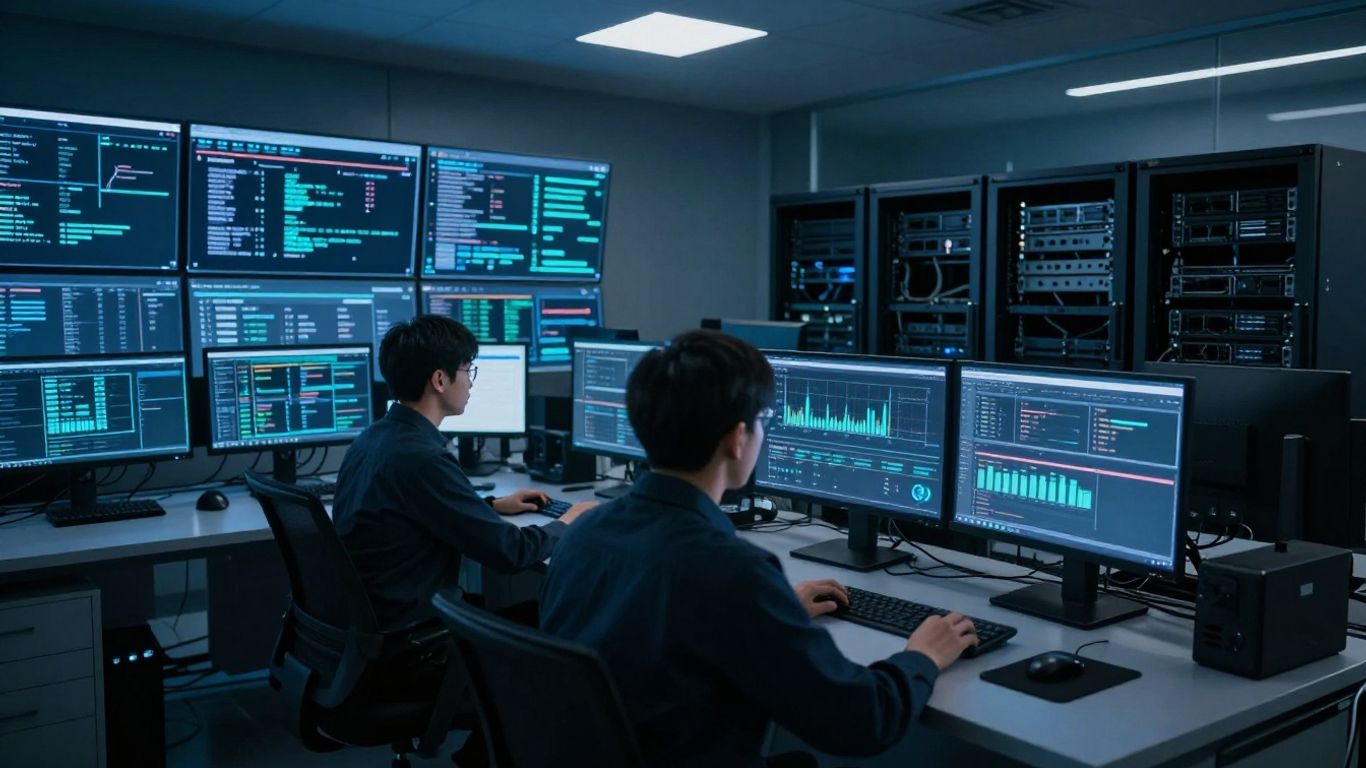
Look, nobody wants a bunch of security tools that don’t talk to each other. It’s like having a bunch of really smart people in a room, but they can’t share notes. That’s why building a unified ecosystem is so important for modern Security Operations Centers (SOCs). It’s not just about having the latest gadgets; it’s about making sure they work together to give you a clear picture of what’s happening.
Integrating SIEM, EDR, and Network Monitoring Tools
Think of your Security Information and Event Management (SIEM) system as the central hub. It pulls in logs and data from everywhere. But on its own, it’s just a giant pile of information. You need to connect it to your Endpoint Detection and Response (EDR) tools, which keep an eye on individual devices, and your network monitoring systems, which watch the traffic flowing in and out. When these systems are linked, you can start seeing how an alert on an endpoint might be related to unusual network activity. This cross-correlation is key to spotting complex attacks.
Here’s a quick look at what each tool brings:
- SIEM: Collects and analyzes logs from various sources.
- EDR: Monitors and responds to threats on endpoints (laptops, servers).
- Network Monitoring: Tracks traffic patterns and detects suspicious network behavior.
The Role of SOAR Platforms in Automation
Once you’ve got your detection tools talking, the next step is automating the response. That’s where Security Orchestration, Automation, and Response (SOAR) platforms come in. They act like the conductor of an orchestra, coordinating actions across your different security tools. Instead of analysts manually investigating every single alert, SOAR can automatically gather more information, block an IP address, or isolate an infected machine based on pre-defined playbooks. This frees up your human analysts to focus on the really tricky stuff. You can find some of the top AI-powered SOC tools designed for this kind of automation by looking at leading agentic SOC platforms.
Unifying Visibility Across Digital Assets
Your organization’s digital footprint is probably spread out everywhere – on-premises servers, cloud environments, mobile devices, you name it. A unified SOC ecosystem needs to have eyes on all of it. This means using tools that can discover and track all your assets, whether they’re physical machines or virtual instances in the cloud. Without this complete visibility, attackers can find blind spots to hide in. Having a single pane of glass, or at least a well-connected set of dashboards, makes it much easier to see the whole picture and understand the potential impact of a threat.
Effective integration means that data flows smoothly between your detection, response, and intelligence tools. This creates a cohesive defense that can react much faster than siloed systems ever could. It’s about making sure all your security investments are pulling their weight together.
Getting this right means your SOC can move from just reacting to threats to being more proactive, understanding risks across your entire digital landscape.
Advanced Threat Detection Techniques at Scale
Behavioral Analysis Beyond Signature Matching
Forget just looking for known bad files or IP addresses. Modern threats are sneaky; they often use legitimate tools or slightly altered code to get past old-school defenses. That’s where behavioral analysis comes in. Instead of relying on a list of signatures, we’re building profiles of what ‘normal’ looks like for users, devices, and the network. When something deviates from that normal – like a user account suddenly accessing files it never touches, or a server making unusual outbound connections – that’s a red flag. This shift from static matching to dynamic observation is key to catching threats that signature-based systems miss. It’s particularly good at spotting insider issues or attackers who’ve managed to steal valid credentials.
Correlating Signals Across Identity, Endpoints, and Networks
Think of it like putting together puzzle pieces scattered across different rooms. An alert on an endpoint might seem minor on its own, but when you see it happening at the same time as a strange login attempt from a new location and unusual network traffic from that same device, a bigger picture emerges. Modern SOCs are getting really good at pulling data from identity systems (like who logged in where), endpoint detection and response (EDR) tools (what’s happening on the computers), and network monitoring. By connecting these dots, we can see an attack unfolding across different parts of the digital environment, rather than just reacting to isolated events.
Here’s a look at how different signals can paint a clearer threat picture:
| Data Source | Potential Anomaly | Correlated Threat Indicator |
|---|---|---|
| Identity Logs | Multiple failed logins followed by a success from an unusual IP | Credential stuffing or account takeover |
| Endpoint Data | Execution of a PowerShell script with obfuscated commands | Potential malware or malicious script execution |
| Network Traffic | Outbound connection to a known command-and-control server | Malware communication or data exfiltration attempt |
Continuous Learning and Adaptation of Detection Models
Attackers aren’t static, so our defenses can’t be either. The systems we use for threat detection need to get smarter over time. This means they’re constantly learning from new threat data, from the outcomes of past incidents, and from feedback provided by human analysts. If a detection model flags something that turns out to be a false alarm, the system learns from that mistake. Likewise, when a new attack technique emerges, the models are updated to recognize it. This iterative process of refinement means our detection capabilities keep pace with the evolving threat landscape, making them more accurate and effective.
The real value isn’t just in spotting an anomaly; it’s in understanding the context and the potential impact. By looking at behavior across various systems and continuously refining our detection methods, we move from simply reacting to alerts to proactively understanding and mitigating complex threats before they cause significant damage.
The Importance of Threat Intelligence Integration
Strategic Insights into Threat Actor Behaviors
Modern security teams can’t just wait for attacks to happen. They need to know what’s coming. That’s where threat intelligence comes in. It’s like having a weather report for the cyber world, telling you about storms brewing and where they might hit. This intelligence gives us a look into how attackers operate, what tools they’re using, and what they’re after. Understanding these patterns helps us build better defenses before we’re even targeted.
Think about it: if you know a particular group likes to use a certain type of malware to get into financial systems, you can put extra checks on anything related to financial data. It’s about being smart and proactive, not just reactive.
Automated Correlation with Security Events
Collecting threat intelligence is one thing, but making sense of it is another. The real magic happens when we connect this intelligence directly to the security alerts we’re already getting. Instead of just seeing a generic alert, we can see if it matches a known threat actor’s activity. This connection helps us figure out if an alert is a real problem or just noise.
Here’s a simplified look at how it works:
- Alert Generated: An unusual login attempt is flagged.
- Intelligence Matched: The IP address or login pattern matches a known malicious source from our threat intel feed.
- Context Added: We now know this isn’t just a random event; it’s potentially part of a coordinated attack.
- Prioritization: The alert gets a higher priority for investigation because it’s linked to a credible threat.
This automated linking saves a ton of time and helps analysts focus on what truly matters.
Informing Proactive Security Measures
Threat intelligence isn’t just for reacting to ongoing attacks; it’s a powerful tool for getting ahead of them. By looking at trends in the threat landscape, we can identify which vulnerabilities are being actively exploited by attackers targeting our industry. This lets us prioritize fixing those specific weaknesses before they can be used against us.
Knowing that attackers are actively looking for ways to exploit a specific flaw in common web servers means we can patch those servers first. It’s about putting our limited resources where they’ll do the most good, based on real-world threats, not just theoretical risks.
This approach helps us make smarter decisions about where to invest our security budget and what security controls to implement or strengthen. It moves us from a defensive posture to a more strategic, forward-thinking security strategy.
Optimizing SOC Operations Through Automation

Security Operations Centers (SOCs) are drowning in alerts. It’s a constant battle to sift through the noise and find the actual threats. This is where automation steps in, not as a replacement for human analysts, but as a powerful assistant. Automating repetitive tasks is key to reducing alert fatigue and letting your team focus on what truly matters. Think of it as giving your analysts superpowers, allowing them to tackle more complex issues without getting bogged down in mundane work.
Automating Repetitive Tasks to Reduce Alert Fatigue
Alert fatigue is a real problem. Analysts can spend hours each day just looking at alerts, many of which turn out to be false positives. Automation can take over much of this initial sorting. AI-powered systems can classify alerts, enrich them with context from threat intelligence feeds, and even perform preliminary investigations. This means analysts see fewer, but more relevant, alerts. It’s about making sure the important stuff doesn’t get missed because someone was busy with a hundred low-priority notifications.
Here’s how automation helps:
- Initial Triage: Automatically categorizing alerts based on severity and type.
- Data Enrichment: Pulling in relevant information like IP reputation, user context, and asset details.
- False Positive Filtering: Identifying and suppressing known benign events.
- Pattern Recognition: Spotting recurring low-level events that might indicate a coordinated attack.
The goal isn’t to eliminate human judgment but to refine it. By offloading the predictable and the routine, automation frees up skilled professionals for critical thinking and complex problem-solving.
AI-Driven Automation for Incident Response
When a real threat is detected, speed is everything. AI can significantly speed up incident response. Instead of analysts manually executing a series of steps, AI can initiate predefined workflows, often called playbooks. These playbooks can automate actions like isolating an infected endpoint, blocking a malicious IP address, or gathering forensic data. This rapid, automated response can stop an attack in its tracks before it causes significant damage. Exploring the top SOC automation tools can provide a clearer picture of available solutions [fb6b].
Orchestrating Containment and Remediation Actions
Automation doesn’t stop at detection and initial response. It extends to containment and remediation. Imagine a scenario where an automated system detects a ransomware infection. It can immediately isolate the affected machine from the network, preventing the spread. Then, it can trigger a backup restoration process or deploy patches. This coordinated approach, often managed by Security Orchestration, Automation, and Response (SOAR) platforms, ensures that actions are taken quickly and consistently, minimizing the impact of security incidents and getting systems back online faster.
Developing a Resilient Threat Detection Strategy
Building a solid threat detection strategy isn’t a one-and-done kind of deal. It’s more like tending a garden; you’ve got to keep at it, weeding out what doesn’t work and nurturing what does. Modern security operations centers (SOCs) know this. They understand that attackers are always changing their game, so their defenses need to change too. This means constantly refining how we look for trouble and how we react when we find it.
Continuous Refinement of Detection Engineering
Think of detection engineering as the art and science of creating the rules and logic that flag suspicious activity. It’s not just about setting up alerts and forgetting them. It involves a cycle of building, testing, and improving these detection mechanisms. For instance, an attacker might try to hide malicious activity by making it look like legitimate system processes. This is often called ‘masquerading’ in the MITRE ATT&CK framework. A good detection engineer won’t just look for the obvious signs of malware; they’ll build rules to spot unusual process behavior, unexpected file access, or network connections that don’t fit the normal pattern.
Here’s a look at how this refinement happens:
- Testing Against Real-World Tactics: Regularly testing detection rules against known attacker techniques, like those mapped in MITRE ATT&CK, is key. This helps find gaps before attackers do.
- Tuning for Accuracy: No detection system is perfect. There will be false positives (alerts for things that aren’t threats) and false negatives (missed threats). Continuous tuning aims to reduce false positives without letting actual threats slip through.
- Incorporating New Data Sources: As your digital environment grows, so does the data you can collect. Integrating new logs from cloud services, endpoints, or network devices can provide a more complete picture and enable more sophisticated detection.
Iterative Improvement Based on Real-World Incidents
Every security incident, whether it’s a minor alert or a full-blown breach, is a learning opportunity. The goal isn’t to point fingers but to understand what happened, why it happened, and how to prevent it from happening again. This involves a structured review process after an incident is resolved.
- Post-Incident Reviews: After an incident is handled, the team should conduct a thorough review. What alerts fired? Which ones were missed? Was the response effective? What could have been done better?
- Updating Detection Logic: Based on the incident review, detection rules might need to be updated. Perhaps a new technique was used that wasn’t previously covered, or an existing rule was too noisy and needs adjustment.
- Knowledge Sharing: Lessons learned from incidents should be shared across the SOC team and potentially with other IT departments. This builds collective knowledge and awareness.
When attackers probe systems, they often do it in stages. They might start with a simple web application exploit, then try to gain access to configuration files. If that works, they might try to establish a foothold using a webshell in cloud storage. Each of these steps generates signals. A resilient strategy means connecting these signals, understanding the attacker’s overall goal, and stopping them early, not just reacting to the last step they took.
Adapting Response Procedures with AI
Response procedures are the playbooks SOC analysts follow when a threat is detected. These used to be very manual and often slow. Now, Artificial Intelligence (AI) is changing the game. AI can help automate parts of the response, speed up decision-making, and even suggest the best course of action.
For example, if an alert indicates a potential credential compromise, AI can quickly analyze user activity, check for unusual login locations, and assess the risk level. It can then suggest actions like temporarily disabling the account or requiring multi-factor authentication, all before a human analyst might even finish reading the initial alert.
- Automated Triage: AI can sort through the flood of alerts, prioritizing the most critical ones for human analysts.
- Contextual Information Gathering: AI can automatically pull relevant data about an alert, such as user history, asset information, and threat intelligence, saving analysts valuable time.
- Response Recommendations: Based on the incident’s characteristics, AI can suggest specific containment and remediation steps, often drawing from pre-approved playbooks.
This iterative approach, combining human oversight with AI capabilities, is what makes a threat detection strategy truly resilient in today’s fast-moving cyber landscape.
Wrapping Up: The Evolving SOC Landscape
So, we’ve talked a lot about how modern Security Operations Centers are changing. It’s not just about having the latest gadgets anymore. It’s really about putting together people, smart processes, and the right technology so they all work together. AI and automation are definitely big players now, helping to sort through all the noise and letting human analysts focus on the really tricky stuff. But remember, tools are there to help the experts, not replace them. Building a SOC that can keep up means constantly tweaking things, learning from what happens, and making sure everyone and everything is on the same page. It’s a continuous effort, but getting it right means your organization is much better protected against whatever comes next.
Frequently Asked Questions
What is a SOC and why are tools important?
A SOC, or Security Operations Center, is like a team of digital detectives protecting a company from online bad guys. Tools are super important because they help this team see what’s happening, catch bad guys faster, and get rid of them quickly. Imagine trying to fight a fire without any hoses or water – that’s what a SOC without the right tools would be like!
How does AI help SOCs catch threats?
Think of AI as a super-smart assistant for the SOC team. It can look through tons of information much faster than a person, spotting weird patterns that might mean trouble. AI also helps sort through all the alerts, so the human detectives can focus on the real dangers instead of getting swamped with unimportant messages.
What does ‘behavioral analysis’ mean in threat detection?
Instead of just looking for known bad things (like a list of known viruses), behavioral analysis watches how things normally act. If a computer or a user suddenly starts doing something unusual, like trying to access secret files it never touches, the SOC gets alerted. It’s like noticing someone acting suspiciously in a store, even if they haven’t stolen anything yet.
Why is connecting different security tools important?
Imagine having separate walkie-talkies for your eyes, ears, and nose. It wouldn’t work very well! Connecting security tools like SIEMs and EDRs means they can share information. This gives the SOC a complete picture of what’s happening, making it easier to see how a small problem could become a big attack.
What is SOAR and how does it help?
SOAR stands for Security Orchestration, Automation, and Response. It’s like a robot helper that can do some of the basic steps when a threat is found. For example, it can automatically lock down a computer that seems infected or block a suspicious website. This saves the human team a lot of time so they can handle the really tricky parts.
How do SOCs keep getting better at catching threats?
The best SOCs are always learning. They look at every attack that happens and figure out how they could have caught it sooner or stopped it faster. They also update their tools and rules regularly, like sharpening their detective skills, so they’re always ready for new kinds of tricks that the bad guys might try.