
Key Takeaways
Understanding the security risks inherent in modern transportation systems is crucial for developers, regulators, and passengers alike. This article explores the evolving landscape of digital threats targeting self-driving technologies.
- Software vulnerabilities allow for potential unauthorized remote control.
- Sensor spoofing can deceive navigation algorithms and environmental awareness.
- V2X communications require robust encryption to block interception.
- Architectural defenses like zero trust are essential for robust security.
- Strong governance and compliance frameworks mitigate systemic risk.
The autonomous vehicle cyber threat landscape
The rapid integration of digital intelligence into transportation has transformed the automotive sector, though it also introduces complex vulnerabilities in safety-critical systems. As vehicles transition from mechanical machines to mobile computing platforms, the entry points for malicious actors multiply significantly, mirroring threats experienced in Autonomous System (AS) hijacking across internet routing infrastructure. Switch Defense provides the educational foundation necessary to grasp why these platforms are increasingly attractive targets for sophisticated attackers, focusing on how modern operating systems often lack the legacy hardening found in traditional network environments.
Software complexity in modern vehicle operating systems
Modern cars rely on millions of lines of code to orchestrate everything from braking to throttle control, creating an expansive surface for potential exploits. The sheer volume of software makes it nearly impossible to eliminate every bug, which is why Switch Defense emphasizes that robust defenses must assume some level of inherent compromise.
| Threat Component | Primary Vulnerability | Potential Security Risk |
|---|---|---|
| Navigation Sensors | Signal Falsification | Loss of spatial orientation |
| Internal Gateways | Unsecured Bus Traffic | Lateral system infiltration |
| Software Updates | OTA Manipulation | Unauthorized firmware injection |
These interconnected software environments require ongoing scrutiny to maintain basic operational integrity before they reach consumer roads.
Critical points of physical and digital integration
Physical and digital systems are fused in ways that grant digital processes direct control over physical movement. When this integration is flawed, it creates significant security challenges similar to those found in critical infrastructure protection, where an attacker might influence physical hardware by manipulating sensor inputs.
Evolving nature of artificial intelligence and machine learning in driving algorithms
The reliance on deep-learning models for path planning and object detection introduces risks like adversarial attacks, where subtle data noise manipulates vehicle decisions. Research highlights that AI-driven attack automation enables actors to identify vulnerabilities far faster than manual testing, creating a constant race between innovation and defense.
Shift from localized systems to connected vehicle dynamics
Vehicles are no longer isolated; they are persistent nodes in a broader infrastructure web. This connectivity allows them to communicate with city grids and other cars, turning the entire environment into an extended attack surface.
Primary attack vectors for vehicle hijacking
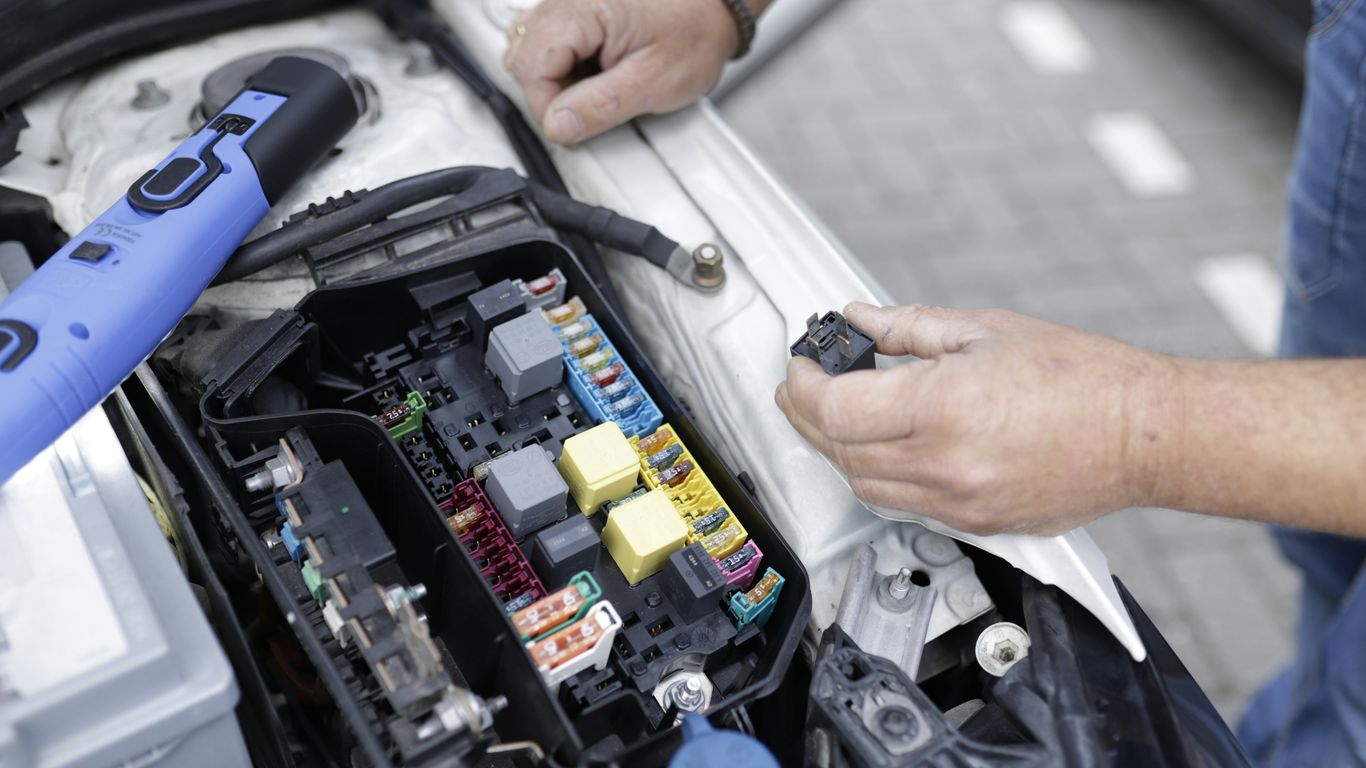
The ability to take control of an autonomous vehicle starts with initial access, moving through various digital and physical layers of the car. Many attackers look for simple entry points that have been neglected during rapid mass production cycles, much like the vectors described in common initial access techniques. Switch Defense provides analysis on these pathways to help stakeholders prioritize the patching of exposed interfaces.
Over-the-air (OTA) update vulnerabilities
A critical risk exists where malicious firmware is pushed to a fleet under the guise of legitimate manufacturer updates. Without verified signatures, the vehicle essentially trusts the attacker, granting them elevated system privileges.
Insecure onboard diagnostics (OBD) ports
Physically accessible ports still serve as a legacy connection point for technicians but are often poorly defended. A simple device plugged into this port can be used to sniff data or send unauthorized commands to the braking and steering systems.
Remote access via telematics and cloud servers
Telematics units frequently communicate with manufacturer servers to send usage statistics and receive navigation data. If these cloud endpoints are not hardened, they serve as a perfect bridge for remote hijacking.
Supply chain attacks on vehicle hardware and firmware components
Because vehicles rely on tiers of global suppliers, malicious code can be embedded deep within the component manufacturing process. This creates a ghost threat that is extremely difficult to detect once the final vehicle rolls off the line.
Compromise of infotainment and multimedia units
Infotainment systems are often less secured than the powertrain, yet they share a network bus with critical driving systems. If an attacker breaches the media player, they may pivot to the vehicle’s driving controller, demonstrating why segmenting these modules is a fundamental requirement.
Sensor manipulation and environmental deception
Sensors represent the eyes and ears of an autonomous machine, and they are susceptible to deception that exploits their physical limitations. When a camera or LiDAR is fed intentional, misleading information, the driving logic can be forced to perceive a clear road as an obstacle or vice versa.
Camouflage techniques and LiDAR spoofing
Attackers may use patterned materials designed to hide from a computer’s visual processing or spray reflectors into the path of LiDAR units. This forces the system to miscalculate distances and potentially initiate emergency stops in dangerous zones.
Radar interference and signal jamming
Radar depends on specific frequencies to detect speed and proximity. By flooding these frequencies with noise, an attacker can blind the vehicle, causing it to lose awareness of surrounding traffic at high speeds.
Adversarial machine learning against computer vision systems
By adding carefully crafted noise to stop signs or markings, criminals can cause a vehicle to ignore a command. The system reads the image, but the AI interprets the mathematical distortion as a different environmental state, showing the danger of AI blind spots in safety systems.
GPS and GNSS signal falsification
Because satellites transmit predictable location data, a rogue transmitter can create a fake signal that makes a vehicle think it is miles away from its actual position. This disrupts precision navigation and might even trick the car’s software into allowing restricted maneuvers.
Exploitation of physical limitations in sensor fusion models
Sensor fusion algorithms combine data from multiple sources to create a coherent world model. By hitting specific limitations in how these models weigh camera vs. radar data, a vehicle can be tricked into favoring the faulty data over the accurate sensor.
Securing vehicle-to-everything (V2X) communications

Vehicle-to-everything communication allows for traffic light coordination and accident alerts, but it also opens a broadcast channel that any nearby adversary can monitor or influence. Ensuring the messages are authenticated is a massive technical challenge, as the system must verify the source within milliseconds to maintain traffic safety.
Authentication protocols for infrastructure-to-vehicle links
Without rigorous authentication, a rogue transmitter could easily broadcast a ‘green light’ command to a vehicle approaching a red signal. Implementing robust digital certificates or identity-based encryption is the industry’s primary method for strengthening infrastructure communication against spoofing.
Mitigating Man-in-the-Middle (MITM) attacks in vehicle networks
A MITM attack allows a bad actor to sit between the vehicle and the infrastructure, subtly altering data packets in transit. This can be countered by using end-to-end encryption that guarantees the authenticity of received messages.
Encrypting telemetry data during high-speed transit
Telemetry data, which reports the vehicle’s status, is a goldmine for attackers seeking to identify historical patterns or driver habits. Encrypting this stream ensures that even if traffic is observed, the contents of the messages remain private.
Balancing latency with security in real-time message verification
Security features cannot cause delays in braking systems. The challenge is verifying the integrity of a message in microseconds so that safety-critical decisions remain near-instantaneous.
Advanced architectural defenses for AV security
Defensive architecture must evolve beyond the simple perimeter-based models of the past. By building systems that assume the internal network is untrusted, we can create a structure capable of containing and neutralizing threats before they escalate into an autonomous vehicle cyber hijacking event. Designing resilience into the hardware ensures that even a partial compromise does not yield total system control.
Implementing zero trust within the vehicle’s internal network
Zero trust requires that every electronic control unit verifies the source and integrity of incoming commands before acting. This stops one infected unit from spreading malware to the powertrain.
Establishing secure boot and hardware-based roots of trust
Secure boot ensures that only software digitally signed by the manufacturer can run on the vehicle’s hardware. This prevents attackers from installing persistent, hidden malware that survives system reboots or updates.
Anomaly detection for monitoring internal bus traffic
Anomaly detectors watch the internal communication channels for any traffic patterns that deviate from normal operation. When an unexpected command signal is detected between components, it can be immediately isolated and logged.
Micro-segmentation of safety-critical electronic control units (ECUs)
By segmenting systems, sensitive functions like braking or steering are locked behind stricter access controls. If an infotainment unit is hacked, its ability to influence the braking ECU is cut off by software-defined perimeters.
Governance, compliance, and risk management
Operational security is not just a coding problem; it is a management and oversight process that requires rigorous adherence to safety standards. Manufacturers must ensure that their developers are trained, their audit processes are automated, and their response plans are tested periodically.
Adhering to international automotive cybersecurity standards
Following global standards ensures consistent security levels across the industry. Compliance frameworks provide a structured method to categorize and mitigate risks, ultimately fostering consumer trust in the long term.
Vulnerability disclosure programs for automotive manufacturers
These programs allow independent researchers to report bugs found in a safe, controlled manner. Encouraging this transparency means manufacturers can patch critical vulnerabilities before malicious hackers exploit them in the wild.
Safety-critical system audit and certification requirements
Every update to a vehicle’s software must undergo a safety audit to ensure that it has not negatively impacted established security baselines. These certifications ensure that the vehicle remains resilient against current and emerging attack methodologies.
Mapping AV security frameworks to industry risk quantification models
Organizations must use clear metrics to track their preparedness. Professionals often use the following checklist to evaluate their security posture regarding these systems:
- Define clear identity and access boundaries for every ECU.
- Map all external data inputs to verified, encrypted channels.
- Perform regular automated reconnaissance for known firmware vulnerabilities.
- Establish a proactive incident response team ready to deploy over-the-air patches.
These metrics help risk managers translate complex technical challenges into executive-level decisions about budget and priorities.
Conclusion
The security of autonomous vehicles is a multifaceted challenge that requires constant vigilance, innovative hardware-based defenses, and rigorous industry-wide governance. As digital technology continues to define the modern driving experience, protecting the safety of the vehicle’s occupants means addressing every link in the technical and supply chains. By focusing on practical security education and adopting a defense-in-depth approach, the automotive industry can mitigate threats and foster public confidence in the future of autonomous transportation.
Frequently Asked Questions
How does an attacker take remote control of an autonomous vehicle?
Attackers typically search for entry points like telematics systems, infotainment units, or cloud-connected service APIs to inject unauthorized commands into the internal Controller Area Network.
Can sensors be manipulated in real time to cause an accident?
Yes, attackers can use signal spoofing or adversarial noise to deceive cameras and LiDAR, which potentially results in the vehicle misinterpreting road conditions, leading to unexpected stops or navigation errors.
What is a Man-in-the-Middle attack in the context of connected cars?
A MITM attack occurs when a bad actor intercepts the communication channel between a vehicle and infrastructure providers, allowing them to read or alter digital messages being sent to the car.
Are software updates the safest part of a modern car?
While updates are intended to patch vulnerabilities, they represent a significant attack vector known as an OTA update compromise, where an attacker pushes malicious firmware that the car incorrectly treats as an official update.
What is micro-segmentation in a vehicle’s architecture?
It is the process of partitioning a vehicle’s internal network such that compromised features like streaming video or music cannot communicate directly with critical components like steering or brakes.
Why are supply chain attacks particularly hard to detect?
Supply chain attacks rely on the presence of malicious code within proprietary third-party components or underlying OS libraries that have been verified as legitimate by the manufacturer, making the threat virtually impossible to see from the outside.
What should drivers do to protect their personal privacy in automated cars?
Drivers should review their vehicle’s privacy settings, disable unnecessary telematics data sharing, manage app permissions in the infotainment system, and ensure that software updates are regularly applied to their local vehicle systems.